Why Should You Not Have a Mirror Facing Your Bed?
If you find yourself waking up groggy or feeling uneasy at night, your bedroom decor might be the culprit. Many experts and interior design philosophies suggest that a mirror facing your bed can disrupt your sleep quality and peace of mind. By shifting your furniture, you can create a more restful and restorative environment for your nightly rest.
Have you ever woken up in the middle of the night, glanced toward your dresser, and felt a sudden jolt of adrenaline? Maybe you caught a shadowy movement in the glass that turned out to be nothing more than your own reflection. While we often think of mirrors as essential tools for getting ready in the morning, their placement in the bedroom is a topic that sparks plenty of debate in 2026. If you have been struggling with restless nights or unexplained anxiety, you might be asking yourself why you should not have a mirror facing your bed.
It is not just about superstition or ancient traditions. Modern interior design and environmental psychology offer very real, grounded reasons why your bedroom layout matters. When you are trying to wind down after a long day, your brain needs to feel safe and secure. A mirror positioned directly across from you can accidentally turn a sanctuary into a source of visual clutter and subconscious stress. Let’s dive into why this simple change might be the secret to your best sleep ever.
Key Takeaways
- Psychological Impact: Mirrors can create a subconscious sense of being watched, leading to increased anxiety or hyper-vigilance during the night.
- Sleep Disruption: Sudden movements or reflections caught in the peripheral vision can startle you and fragment your sleep cycles.
- Feng Shui Principles: In traditional Feng Shui, a mirror facing your bed is believed to bounce energy around the room, which prevents deep relaxation.
- The “Startle” Effect: Seeing your own reflection in a dark, quiet room can trigger a “fight or flight” response, making it harder to fall back asleep.
- Better Energy Flow: Repositioning mirrors can help create a more harmonious, calm, and grounded bedroom atmosphere conducive to recovery.
The Psychological Aspect of Reflection
Our brains are wired to scan our environment for threats, even when we are resting. This is a survival instinct that helped our ancestors stay alive. When you have a mirror facing your bed, your brain is constantly processing visual information, even if you are not fully aware of it. Seeing movement—even your own—in the dark can trigger a subtle alertness that keeps your mind from entering deep, restorative sleep cycles.
The “Ghost” Effect
We have all been there. You wake up at 3:00 AM, thirsty or restless, and the room is bathed in moonlight. If a mirror is across from your bed, the glass might catch the flicker of a tree branch outside or the movement of a curtain. Your brain, in its sleepy state, might misinterpret this as an intruder or a sudden movement. This “ghost effect” keeps your nervous system on high alert, making it difficult to drift back into a peaceful slumber.
Managing Visual Stimulation
A bedroom should be a sanctuary for rest. Modern homes are already filled with screens, notifications, and constant stimulation. When you lie down, your eyes should ideally rest on calming textures or soft, dim colors. A reflective surface acts as a visual “loud noise.” It draws the eye and encourages your brain to remain active rather than transitioning into the quiet, dark state required for melatonin production.
Feng Shui and Energy Flow
The practice of Feng Shui has been around for centuries, and it places a massive emphasis on how furniture arrangement impacts your wellbeing. In this tradition, the bedroom is the most important room in the house because it is where you recharge. The concept of why you should not have a mirror facing your bed is a cornerstone of this philosophy.
Visual guide about Why Should You Not Have a Mirror Facing Your Bed
Image source: chi-nese.com
Bouncing Energy Around
Feng Shui practitioners believe that energy, or “chi,” flows through your home. They suggest that mirrors act as energy reflectors. When a mirror faces your bed, it is said to bounce energy back and forth throughout the room rather than allowing it to settle. This creates an atmosphere of restlessness. Instead of the room feeling like a cozy cocoon, it feels active and charged with too much movement.
Protecting Your Personal Space
There is also a symbolic element to this. Some traditional schools of thought suggest that a mirror facing the bed can act as a “third party” in your intimate space. While this sounds abstract, the practical result is a lack of privacy and grounding. When you remove the reflection from your line of sight, you are essentially closing the door on the outside world and focusing solely on your recovery.
The Impact on Sleep Quality
Quality sleep is the foundation of your health in 2026. With the fast pace of life today, protecting your sleep hygiene is not just a luxury—it is a necessity. If you are waking up groggy or feeling like your sleep is fragmented, the mirror might be contributing to a process called “micro-arousals.”
Reducing Micro-Arousals
Micro-arousals are short, split-second moments where you wake up just enough to notice your surroundings before falling back to sleep. You likely will not remember these in the morning, but they prevent you from staying in the deep, REM sleep cycles necessary for cognitive function. A large, reflective surface can cause these interruptions by catching light or casting unusual shadows that catch your eye during the night.
Creating a Calm Environment
To get the best sleep, you want your environment to be as static and predictable as possible. By removing or covering the mirror, you eliminate a major source of visual unpredictability. This allows your brain to “let go” more easily. If you feel like your bedroom feels “busy” or “chaotic,” try covering the mirror with a cloth for three nights. You might be surprised at how much more relaxed you feel when you lie down.
Practical Alternatives for Bedroom Mirrors
If you absolutely love your mirror or you have a small room where a dresser is the only place it can fit, do not worry. You do not necessarily have to throw it away. There are several ways to manage the reflection without sacrificing your decor style.
Using Decorative Covers
One of the easiest solutions is to use a decorative cover. You can drape a beautiful, lightweight scarf or a stylish piece of fabric over the mirror before you go to bed. This turns the mirror into a piece of art during the day and a non-reflective surface at night. It is a simple nightly ritual that marks the transition from “active time” to “rest time.”
Repositioning Your Furniture
If your room allows, consider moving the mirror to a wall that is not directly opposite the bed. A mirror on the side wall, or even inside a closet door, can be just as functional while removing the direct line of sight. By shifting your perspective, you keep the utility of the mirror without the nighttime downside.
Utilizing Closet Doors
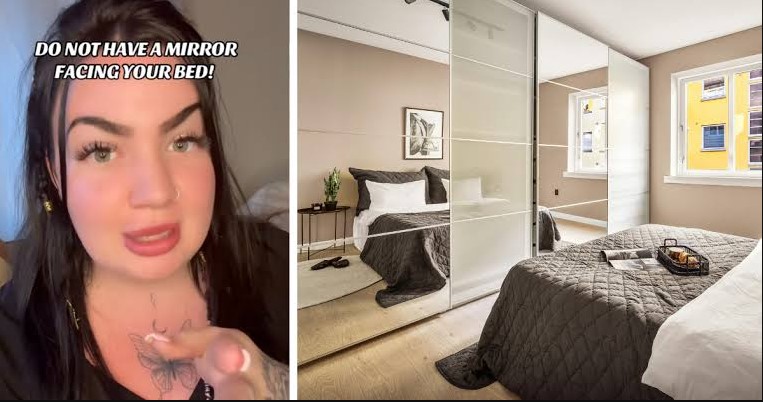
Many modern wardrobes in 2026 come with mirrored panels. If your mirror is attached to a sliding closet door that faces your bed, try to keep the doors closed at night. If you must have them open, consider adding a partition or a decorative screen. This creates a physical boundary between your sleeping area and the reflective surface.
The Science of Low Light and Mood
Your body is incredibly sensitive to light. Even a small reflection of light from a mirror can interrupt your circadian rhythm. If your mirror catches the beam of a streetlamp, a car headlight passing by, or even the glow of your alarm clock, it will project that light directly back toward you.
Eliminating Unwanted Light
Excess light suppresses the production of melatonin, the hormone responsible for sleep. If your mirror is magnifying or reflecting light from other sources, you are essentially making it harder for your body to prepare for rest. By angling or covering the mirror, you ensure your room stays as dark as possible, which is a major factor in improving sleep quality.
Improving Your Morning Mood
Believe it or not, the way you wake up matters, too. Waking up in a room that feels serene, rather than one that feels like a department store dressing room, can improve your mood. When you don’t immediately see your own reflection the moment you open your eyes, you have a few precious moments to just “be.” It helps you start the day with intention rather than immediately focusing on your appearance.
Conclusion
At the end of the day, your bedroom should be the place where you feel the most at peace. If you find yourself asking, “why should you not have a mirror facing your bed,” the answer is multifaceted. Whether it is the subtle psychological impact of reflections, the traditional wisdom of Feng Shui, or the practical need for a darker, quieter environment, the evidence points toward keeping the space around your bed clear.
You do not need to make drastic changes to see a difference. Start small. Move the mirror to a different wall, cover it with a piece of fabric, or simply tilt it so it no longer reflects your resting spot. Test it out for a week and pay attention to how you feel when you wake up. By refining your bedroom layout, you are taking a simple yet powerful step toward better sleep, improved mental clarity, and a more harmonious home environment. Your body—and your sleep cycle—will thank you for it.
Frequently Asked Questions
Is it bad luck to have a mirror facing the bed?
In various cultural traditions, including Feng Shui, it is believed to disrupt energy and cause restlessness. While “luck” is subjective, the reported impact on sleep quality makes it a common recommendation to avoid this placement.
What if I have no other place to put my mirror?
If space is limited, you can cover the mirror with a decorative cloth at night or tilt it slightly away from the bed. These simple adjustments remove the reflection from your field of vision without requiring you to get rid of the furniture.
Does a mirror actually affect sleep quality?
Yes, for many people, the visual stimulation of a reflection can cause micro-arousals during the night. By removing potential visual distractions, you help your brain stay in deeper, more restorative sleep cycles.
Can mirrors make a room feel smaller if moved?
While mirrors are great for making a room look larger, placing them on a side wall or the back of a door can still provide that illusion. You can achieve the same aesthetic benefits without the mirror being directly across from your bed.
Are there scientific studies on this?
Most research focuses on light pollution and sleep hygiene rather than mirrors specifically. However, environmental psychology confirms that minimizing visual stimuli and light reflections is essential for deep, uninterrupted sleep.
Should I cover my TV if it is reflective?
Yes, many people find that a dark, reflective television screen has the same effect as a mirror. Covering a TV with a soft cloth or a decorative cover can help reduce that “startle” factor and improve your overall sleep hygiene.