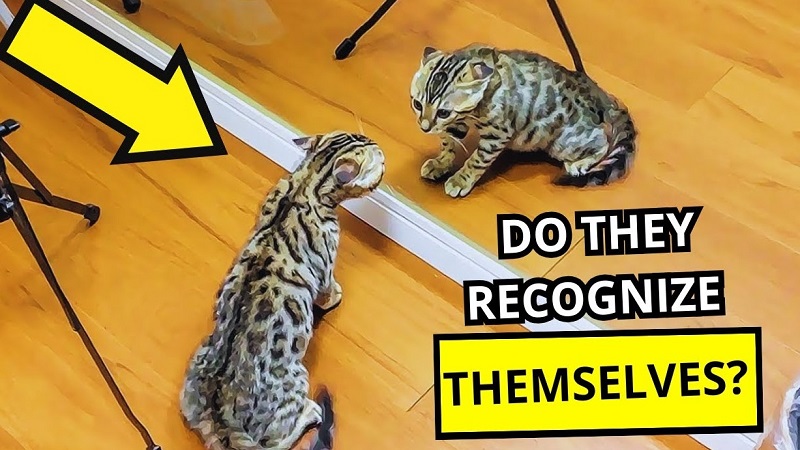
Do Cats Recognize Themselves in the Mirror?
Have you ever wondered, do cats recognize themselves in the mirror? The short answer is no, they do not possess self-awareness in reflections. Instead, most felines either ignore the mirror or treat the reflection as a stranger, a toy, or a potential threat.
Key Takeaways
- No Self-Recognition: Cats lack the cognitive ability to understand that the image in the glass is them.
- Scent Over Sight: Felines rely much more heavily on their sense of smell than their vision to identify others.
- Lack of the MSR Test: Unlike dolphins and chimpanzees, cats fail the classic mirror self-recognition test entirely.
- Curiosity vs. Fear: Initial reactions usually involve sniffing, pawing, or ignoring the reflection once they realize it has no scent.
- Evolutionary Traits: In the wild, spending time analyzing static reflections offered no survival advantage for hunters.
- Individual Personalities: Just like humans, some cats are more curious or easily startled by mirrors than others.
Introduction to Feline Reflection
Picture this: your kitty strolls past the hallway mirror, catches a glimpse of another cat, and suddenly puffs up like a spooky Halloween decoration. It is a hilarious moment that many pet parents capture on video. But it always leads back to the burning question that pet lovers ask all the time: do cats recognize themselves in the mirror?
It is a fun mystery that touches on animal psychology, behavior, and how our furry friends perceive the world around them. When you watch a kitten bat at a glass surface, you might assume they know it is just a game. However, science tells us a very different story about how your cat’s brain processes what they see in that shiny surface.
In this comprehensive guide, we are going to dive deep into feline vision, behavior, and cognitive science. By the end, you will have a crystal-clear understanding of what goes on inside your kitty’s mind when they gaze into a mirror. Let us unlock the secrets of how cats view their own reflections!
The Science Behind Self-Recognition
To truly answer do cats recognize themselves in the mirror, researchers look at how animals test for self-awareness. Scientists use specific psychological experiments to determine if a species understands that the reflection belongs to them.
The Mirror Self-Recognition Test
Back in the 1970s, a researcher named Gordon Gallup developed the Mirror Self-Recognition (MSR) test. He placed a mark of odorless paint on an animal’s body where they could only see it by looking in a mirror. Animals like chimpanzees, dolphins, and elephants will look in the glass and touch the mark on their own bodies.
When researchers tested felines with similar methods, the results were vastly different. So, do cats recognize themselves in the mirror during these trials? Absolutely not. Instead of touching the mark on themselves, they either ignore the spot or try to bat at the reflection in the glass.
Why Felines Fail the Test
Failing the MSR test does not mean your pet is unintelligent. It simply means their evolutionary path focused on different survival skills. Wild ancestors needed to track prey, avoid predators, and navigate terrain. They did not need to ponder their own existence in a pool of water or a flat pane of glass.
Self-awareness in mirrors is actually quite rare in the animal kingdom. Most mammals rely on senses other than sight to understand their place in the world. For your kitty, a reflection is just a puzzle that defies their primary way of experiencing reality.
How Cats Actually Process Mirrors
Since felines do not see themselves, what *do* they think is in that glass? To figure this out, we have to look at how their senses work on a daily basis. The answer involves a fascinating mix of vision and scent.
Vision Versus Scent
Humans are heavily visual creatures. We rely on our eyes to identify friends, strangers, and ourselves. Cats, on the other hand, are nose-first animals. They use scent glands on their cheeks, paws, and tails to map out their territory and recognize family members.
When your cat looks in the mirror, they see a cat shape, but they smell absolutely nothing. This sensory mismatch is deeply confusing for them. They see another kitty, but their nose tells them the room is completely empty of other animals. Because of this, do cats recognize themselves in the mirror? No, they usually just decide the visual information is broken or untrustworthy.
The “Ghost Cat” Phenomenon
Have you ever watched your pet approach a mirror, sniff it, and then casually walk away? This is the most common reaction. Once they figure out the image has no scent and makes no sound, they lose interest completely.
Some pets might treat the reflection like a ghost. They realize they cannot interact with it in a normal way. It does not run away when chased, and it does not smell like a friend or foe. To a curious feline brain, this makes the mirror a very boring and confusing object after the initial novelty wears off.
Behavioral Reactions to Reflections
Every pet is unique, which means reactions to mirrors can vary wildly from one household to another. While some animals ignore the glass, others put on quite a show.
Curiosity and Playfulness
Kittens and young adults are especially prone to mirror antics. Because everything in the world is new to them, they treat the reflection as a potential playmate. You might see your young cat doing sideways hops, batting at the glass, or trying to peek behind the frame to find the hidden intruder.
This playfulness is totally normal and harmless. It is just another way for a young animal to test out their hunting instincts and burn off some extra kitten energy.
Fear and Aggression
On the flip side, some adult pets react with hostility. If an older cat sees a reflection and mistakes it for an invading feline, their territorial instincts kick in. They might arch their backs, hiss, growl, or even puff out their tails.
This reaction happens because the mirror image mimics the body language of an encroaching stranger. If your pet gets stressed out by mirrors, it is a good idea to block their access or cover low-lying mirrors to keep them calm and happy.
Tips for Managing Mirror Interactions
Most of the time, mirror gazing is harmless entertainment for both humans and pets. However, if your furry friend gets overly stressed, you might want to take a few steps to help them out.
Practical Steps for Stressed Pets
- Cover Low Mirrors: Use temporary film or reposition furniture if a floor-length mirror causes constant aggression.
- Distract with Toys: Redirect their attention with a feathery wand toy whenever they fixate on their reflection.
- Provide Scent Soothers: Rub a soft cloth on your cat’s cheeks and place it near the mirror so they smell familiar pheromones instead of confusion.
By keeping these simple tips in mind, you can ensure your living space remains a peaceful sanctuary. Remember, a relaxed pet is a happy pet, and minimizing unnecessary stress goes a long way toward good behavioral health.
Conclusion on Feline Self-Awareness
So, we have journeyed through the science, the senses, and the quirky behaviors of our favorite feline friends. Do cats recognize themselves in the mirror? The scientific consensus is a resounding no, but that does not make their interactions any less entertaining.
Whether your kitty treats their reflection like a playful buddy, an invisible ghost, or a sworn enemy, it is all part of their unique charm. Understanding how they view the world helps us bond with them even more. The next time your cat stares blankly at the glass, you will know exactly what is going on inside that cute little head!
Frequently Asked Questions
Do cats think mirrors are other cats?
Yes, initially most felines believe the reflection is another animal. However, because the image lacks a scent, they quickly realize it is not a real living creature.
Why do some cats ignore mirrors completely?
Many adult pets simply learn through past experience that reflections are harmless optical illusions. Since the image cannot be touched or smelled, they choose to ignore it entirely.
Can cats learn to recognize themselves over time?
No studies have shown that felines can ever develop self-recognition in mirrors. Their cognitive framework simply does not process visual self-image the way humans and certain primates do.
Are kittens more likely to react to mirrors than adult cats?
Yes, young kittens are much more playful and easily fooled by reflections. As they mature, they learn the rules of their environment and usually stop caring about the glass.
Is it harmful for cats to look in mirrors?
For most animals, mirrors are totally harmless and provide a brief moment of curiosity. However, if a cat becomes chronically stressed or aggressive, it is best to limit their access.
Do other animals recognize themselves in mirrors?
Only a small handful of animals pass the mirror self-recognition test, including chimpanzees, dolphins, elephants, and magpies. Most domestic pets, including dogs and cats, do not pass.