Do Dogs Recognize Themselves In The Mirror?
Ever stared at your pup and wondered, do dogs recognize themselves in the mirror? The short answer is no, they typically do not possess visual self-recognition. Instead, unlike humans and some primates, dogs rely much more on their incredible sense of smell to understand the world around them.
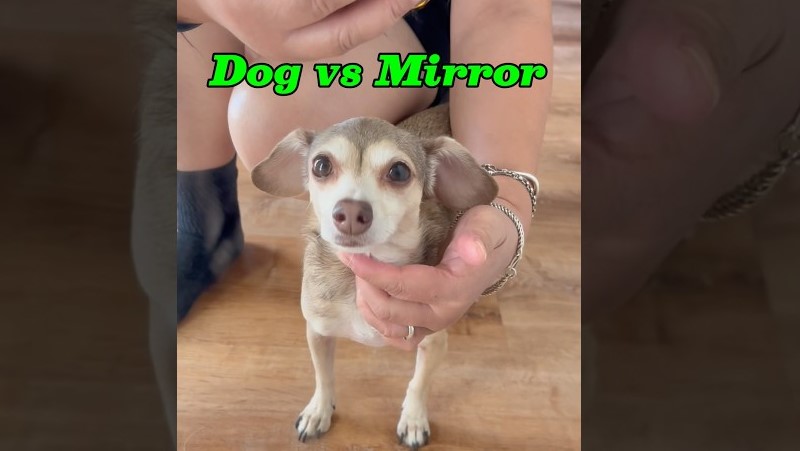
Have you ever stood in front of a mirror with your furry best friend, watched them tilt their head, and wondered: do dogs recognize themselves in the mirror? It is a fun question that crosses the minds of many pet parents every single day. You might see your puppy bark at the glass, try to play with the puppy on the other side, or just walk away in total boredom.
To understand what is happening inside your dog’s clever brain, we have to look at animal behavior, evolution, and science. Humans pass the mirror test easily by age two or three, but our canine companions live in a completely different sensory universe. Let us dive deep into the fascinating world of canine perception and uncover the truth about how dogs react to their own reflections.
Key Takeaways
- Lack of Visual Recognition: Scientific studies show that do dogs recognize themselves in the mirror questions usually result in a negative answer.
- The Olfactory Mirror Test: Dogs use scent rather than sight to identify themselves and other animals.
- Evolutionary Differences: Vision was not the primary survival tool for canine ancestors, making sight-based self-awareness unnecessary.
- Initial Reactions: Most dogs initially bark at, play with, or completely ignore their reflection.
- Habituation: Over time, dogs learn to ignore the mirror because the reflection produces no scent or sound.
- Cognitive Abilities: Not recognizing themselves does not mean dogs lack intelligence; they just process their environment differently.
The Science Behind Self-Recognition
Scientists have studied animal self-awareness for decades. The gold standard for this research is the famous “Mirror Test,” originally created by psychologist Gordon Gallup in 1970. During these tests, researchers place a silent mark on an animal’s body where they can only see it using a mirror. If the animal touches or investigates the mark on its own body, it passes the test.
The Mirror Test Results
Only a select few species pass the visual mirror test. This exclusive club includes chimpanzees, dolphins, elephants, and magpies. Sadly, domestic canines do not pass this visual test. When researchers ask do dogs recognize themselves in the mirror through formal trials, the results are very clear. Dogs do not realize that the furry creature staring back at them is actually themselves.
Why Sight Takes a Backseat
Humans are heavily visual creatures. We rely on our eyes to navigate the world, read, and recognize faces. Because of this, we assume our pets do the same. But dogs live in a world of smells. Their sense of smell is up to one hundred thousand times more sensitive than ours. Asking a dog to recognize itself visually is a bit like asking a human to recognize themselves purely by listening to a distant, muffled radio static.
How Dogs Perceive Their Reflections
If they do not know it is them, what do dogs actually think is in the mirror? When you ask do dogs recognize themselves in the mirror, you must also look at how they react in those first few moments. Every dog is unique, but their reactions generally fall into a few predictable categories.
The Curious Investigator
Many young puppies or high-energy dogs treat the mirror image like a brand-new playmate. They might do a play bow, bark to get a response, or bat at the glass with a paw. When the reflection does not smell like anything, confusion sets in. The dog realizes this strange animal has no scent, which goes against every rule they know about meeting someone new.
The Total Ignore
Older or more experienced dogs usually exhibit habituation. This big scientific word just means they get used to the reflection and stop caring. Once a dog figures out that the mirror image poses no threat and offers no reward, their brain files it under “boring and irrelevant.” They will simply walk right past the mirror without a second glance.
The Olfactory Mirror Test
Since the traditional mirror test is biased toward visual animals, scientists decided to invent a test that suits canine strengths. Enter the “yellow snow” experiment, or more formally, the cognitive scent test for dogs.
Testing the Power of Scent
Researchers tested dogs by presenting them with containers of their own urine, the urine of familiar dogs, and the urine of strangers. The results proved incredible. Dogs spent very little time sniffing their own scent because they already knew it well. However, they spent a lot of time investigating the scents of other dogs.
The Scent-Based Self-Awareness
This experiment proved that dogs do indeed have a strong sense of self, but it is entirely based on scent rather than sight. When you ponder do dogs recognize themselves in the mirror, remember that they do not need a mirror to know who they are. Their nose tells them their own identity every single second of the day.
Common Myths About Dogs and Mirrors
Because humans love to anthropomorphize our pets, a lot of myths float around the internet. People love to share viral videos with titles claiming their dog finally realized it was looking in the mirror. Let us clear up some of these common misconceptions.
Myth: Smart Dogs Will Always Recognize Themselves
Some owners believe that if their dog is very smart, like a Border Collie or Poodle, it should pass the mirror test. Intelligence has nothing to do with it. A dog’s brain simply is not wired to map a reflection to its physical body using only sight. Even the most brilliant working dog will fail a visual mirror test.
Myth: Aggression Means the Dog is Stupid
If your dog growls or barks at the mirror, it does not mean they lack brains. To a dog, a silent, unmoving animal invading their personal space is an odd social cue. Guard dog breeds, in particular, might feel protective of their home territory and try to warn the “stranger” in the glass to back off.
Practical Tips for Pet Parents
Now that you know the truth behind do dogs recognize themselves in the mirror, you can use this knowledge to help your anxious or curious pets feel more comfortable around reflective surfaces in your home.
Helping Anxious Puppies
Full-length mirrors placed at dog eye-level can sometimes stress out nervous puppies. If your dog constantly barks at or stresses out over a mirror, try these quick tips:
- Block access to low mirrors using furniture or baby gates.
- Cover the bottom portion of the mirror with a decorative film.
- Distract your dog with a fun puzzle toy when walking past the glass.
- Reward calm behavior with treats near the mirror.
Most dogs will naturally habituate to the mirrors in your house within a few days. Once they learn that the reflection is harmless, they will stop reacting entirely.
Conclusion
So, do dogs recognize themselves in the mirror? The scientific consensus is a firm no, but that does not make our canine companions any less amazing. While they might fail the visual mirror test, their brilliant noses give them a rich, complex sense of self that we can barely imagine. The next time you catch your pup staring at the glass, smile knowing they are just trying to figure out why that reflection has no scent at all!
Frequently Asked Questions
Do dogs know what they look like?
No, dogs do not have a mental picture of their own appearance because they rely primarily on their sense of smell rather than sight to understand the world.
Why do some dogs bark at mirrors?
Dogs often bark at mirrors because they view their reflection as an unfamiliar animal or intruder that is invading their personal space without producing any scent.
Do cats recognize themselves in mirrors better than dogs?
Both cats and dogs generally fail the visual mirror test and treat their reflections as other animals or simply ignore them over time through habituation.
Can blind dogs use mirrors?
Since sighted dogs cannot visually recognize themselves in mirrors, vision loss does not change their lack of visual self-recognition in any way.
Do puppies react differently to mirrors than adult dogs?
Yes, young puppies are much more likely to play with, bark at, or investigate their reflection, whereas adult dogs usually ignore mirrors completely.
Is there a mirror test designed specifically for dogs?
Scientists use scent-based tests, such as presenting containers of various urines, to study how dogs recognize their own identity through their powerful sense of smell.