Why Does My Body Look Different in Different Mirrors?
Have you ever stood in front of a mirror at home feeling great, only to look into a store fitting room mirror and feel completely discouraged? You are definitely not alone in this frustrating experience. The simple truth is that physical laws, lighting angles, and manufacturing imperfections mean your body look different in different mirrors every single day.
[FEATURE_IMAGE_PLACEHOLDER]Let us talk about a universal human experience. You wake up, brush your teeth, and catch a glimpse of yourself in the bathroom mirror. You feel pretty good about your reflection. Later on, you step into a clothing store fitting room, pull the curtain shut, and suddenly wonder who that stranger is in the glass. Why does my body look different in different mirrors?
It is a question that has sparked anxiety and confusion for decades. One minute you feel toned and proportional, and the next minute you look washed out, wider, or shorter. Before you let a piece of glass ruin your mood, take a deep breath. The reflection you see is not an objective truth. It is an optical illusion shaped by physics, chemistry, and environmental design.
Key Takeaways
- The Glass Matters: Standard mirrors use a second-surface design where light passes through thick glass before reflecting, creating subtle distortions.
- Lighting is Everything: Overhead harsh lights cast deep shadows that exaggerate muscle definition or cellulite, while soft front lighting flattens features.
- Distance and Curvature: Even slightly bowed glass can act like a wide-angle camera lens, making you look wider, taller, or thinner than you actually are.
- Brain Perception: Your mind constantly compares your reflection to internal self-image standards, often magnifying perceived flaws.
- Store Psychology: Retailers sometimes use specialized mirrors to subtly alter proportions, influencing how clothes fit and feel on your body.
- Consistency Over Reflections: True health and body shape do not change based on a pane of glass, so relying on how you feel is far more reliable.
The Physics of Glass: How Mirrors Are Made
To understand why your body look different in different mirrors, we have to start with how mirrors are manufactured. Not all glass is created equal, and the physical construction of a mirror plays a massive role in the image it throws back at you.
First-Surface Versus Second-Surface Mirrors
Most everyday mirrors are known as second-surface mirrors. This means the reflective silver coating is applied to the back of the glass, while the front of the glass acts as a protective layer. When light hits a second-surface mirror, it passes through the glass, hits the silver backing, and travels back through the glass to your eyes.
This journey through the glass causes a tiny amount of refraction. The thickness and purity of the glass can bend light in subtle ways. High-end mirrors use ultra-clear, low-iron glass, while budget mirrors use standard glass with a greenish tint. This tint can subtly alter skin tones and make shadows look harsher, changing how your body shape appears.
Subtle Bending and Surface Tension
Mirrors are rarely 100 percent flat. During the cooling and manufacturing process, glass can develop microscopic warps. If a mirror is mounted too tightly into a frame, the glass might bend slightly inward or outward. When glass bows outward, it acts like a concave lens, making you look slimmer. When it bows inward, it acts like a convex lens, making you look wider. This explains why your body look different in different mirrors even within the same house.
Lighting: The Ultimate Master of Illusion
If glass construction is the canvas, lighting is the artist. Lighting can completely transform your appearance, turning soft curves into harsh lines or flat planes into sculpted muscle. Have you ever noticed how great you look in a dimly lit restaurant bathroom versus the harsh fluorescent lights of an office building?
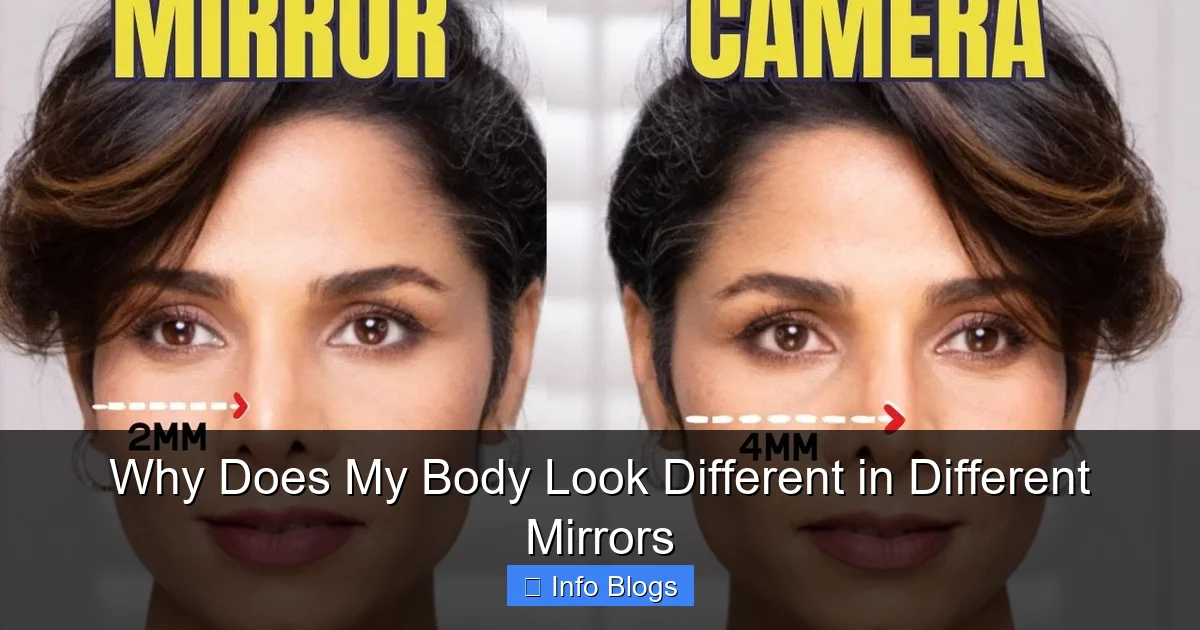
Visual guide about Why Does My Body Look Different in Different Mirrors
Image source: i.ytimg.com
Overhead Lighting Versus Front Lighting
The angle of your light source dictates how shadows fall across your skin. When light shines directly from above, it creates deep shadows under your cheekbones, collarbones, and abdominal muscles. This can make you look leaner and more defined, which is why gym bathroom lighting is so popular for mirror selfies.
Conversely, flat front lighting from vanity bulbs eliminates shadows entirely. While this is great for applying makeup, it can make your body look washed out and two-dimensional. If you have ever asked why does my body look different in different mirrors, check the light bulbs. Warm bulbs create a flattering, golden glow, while cool LED bulbs expose every single texture on your skin.
The Danger of Multiple Light Sources
Fitting rooms are notorious for cross-lighting. When light hits you from the left, right, and top simultaneously, multiple competing shadows are cast on your body. This cross-shadowing can exaggerate cellulite, stretch marks, or uneven skin tone in ways that natural daylight never would.
Distance, Angle, and Your Field of View
Physics also dictates how proportions change based on where you stand relative to the glass. You might look drastically different taking a full-length mirror photo compared to leaning in close for a quick check.
The Wide-Angle Effect
Just like a smartphone camera lens, mirrors can distort proportions based on distance. If you stand very close to a small mirror, your central features, like your chest or stomach, appear closer to the glass and therefore larger relative to the rest of your body. Stepping back allows your entire frame to fit into the visual field evenly, restoring natural proportions.
Tilt and Elevation
Look closely at how a mirror is hung on the wall. If a full-length mirror tilts forward even a single degree at the top, it creates a lengthening illusion that makes you look taller and slimmer. If it tilts backward, it squishes your proportions and makes you look shorter and wider. Many retail stores intentionally angle their mirrors to flatter shoppers, while others accidentally use poorly hung mirrors that distort your frame.
The Psychology of Body Perception
While physics and lighting do the heavy lifting, your brain plays a huge role in why your body look different in different mirrors. Human perception is not a video camera; it is an active filter influenced by mood, stress, and expectations.
Confirmation Bias and Self-Critical Focus
When you feel confident, you walk past a mirror and notice your posture, your outfit, or a great hair day. When you feel bloated, tired, or stressed, your brain enters hyper-vigilant mode. You scan the mirror specifically looking for flaws. The mirror itself hasn’t changed, but your internal filter has shifted entirely.
The Familiarity Trap
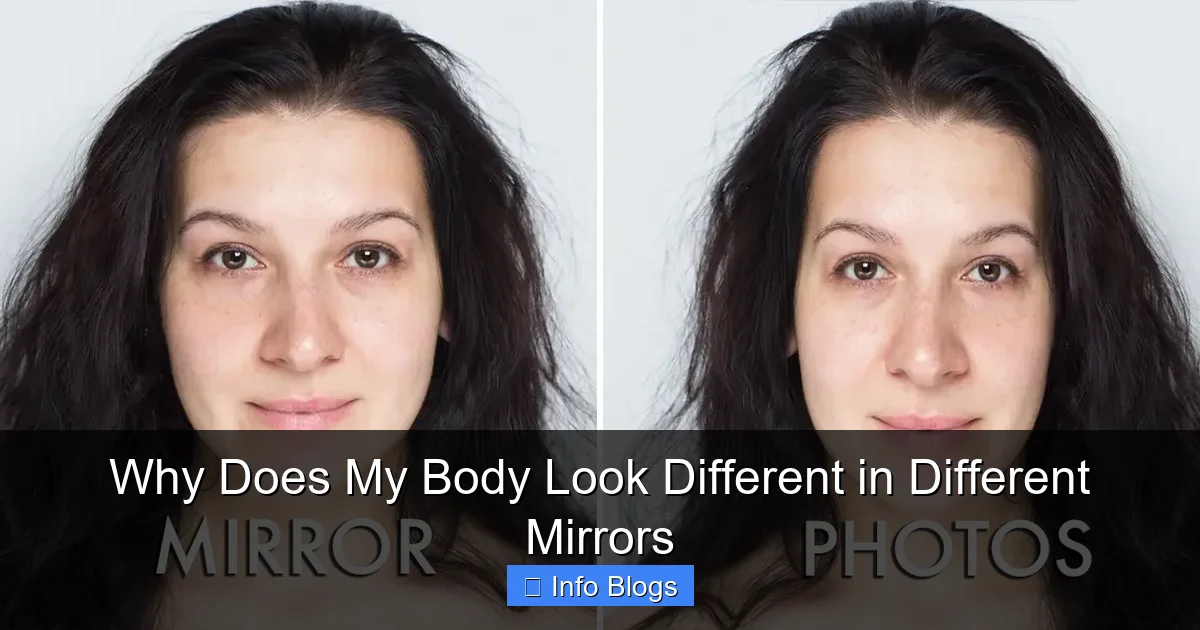
Think about how you view yourself. You spend most of your life looking at a reversed image of yourself in the bathroom mirror. When you see a photograph taken by someone else or a non-reversed mirror, your brain panics slightly. It notices that your part is on the wrong side or your facial asymmetry is flipped. This unfamiliarity breeds discomfort, leading you to think your body looks weird or wrong.
Retail Psychology: Do Stores Use Magic Mirrors?
There is an urban legend that clothing stores use funhouse mirrors to trick shoppers into buying clothes. While most stores are not using cartoonish carnival mirrors, retail design is an exact science.
The Slenderizing Mirror Trick
Some boutique fitting rooms use slightly curved glass or tilt the mirror back to create a slimming effect. When you feel good about your reflection in a pair of jeans, you are much more likely to make a purchase. On the flip side, some discount stores use cheap, wavy glass that creates unflattering distortions, leaving you frustrated and confused about your actual size.
Color Temperature in Retail Spaces
Retailers carefully select light bulbs to complement skin tones and fabric colors. Warm lighting makes clothes look richer and skin look healthier. When you take those same clothes home and try them on under the cool, harsh light of your hallway, they might look completely different. This phenomenon mimics why your body look different in different mirrors between home and the store.
How to Find Your True Reflection
Since mirrors are notoriously unreliable, how can you ever know what you actually look like? The good news is that you can take practical steps to neutralize the optical illusions around you.
Seek Natural Daylight
Natural sunlight is the most honest light source available. Stand near a large window during the day to see a balanced, true-to-life representation of your skin tone and body shape. Daylight washes out fewer details and avoids the harsh shadows created by artificial bulbs.
Rotate and Test Multiple Mirrors
If you want a realistic baseline, do not rely on just one mirror. Check your reflection in the bathroom, the hallway, and a hand-held mirror. Notice the patterns. If you look great in all of them except for one specific store mirror, you can safely blame the glass.
Focus on How You Feel
Ultimately, your body is not defined by a reflective surface. Energy, strength, and health are what truly matter. When you catch yourself obsessing over why does my body look different in different mirrors, remind yourself that the glass is just bending light. Your worth and your actual physical form remain the same, regardless of what the mirror says.
By understanding the science of light, glass manufacturing, and brain perception, you can free yourself from mirror anxiety. Next time your reflection looks off, remember it is just physics at play, not a reflection of your true self.
Frequently Asked Questions
Why do I look thinner in some mirrors and wider in others?
This happens because glass can be slightly curved during manufacturing, acting like a concave or convex lens. Additionally, varying lighting angles and mirror tilts can stretch or compress your visual proportions.
Are fitting room mirrors designed to trick you?
Some retailers use slightly tilted mirrors or warm lighting to create a more flattering reflection, which can boost shopping confidence. However, most commercial mirrors simply reflect the specific lighting and angles of that particular retail space.
What is the most accurate mirror to use at home?
Mirrors placed in rooms with diffused natural daylight provide the most accurate representation of your body. High-end, flat plate-glass mirrors with low iron content also reduce color distortion and refraction.
Why does my reflection look different in photos than in the mirror?
Mirrors show a horizontally reversed image that you are accustomed to seeing every day. Photos usually show your non-reversed appearance, which can look jarring and unfamiliar to your brain.
Can lighting really change my body shape in a mirror?
Yes, absolutely. Overhead lighting casts deep shadows that exaggerate muscle definition and tone, while flat front lighting or harsh cross-lighting can highlight skin texture and change perceived proportions.
How can I stop letting mirrors dictate my mood?
Recognizing that mirrors are imperfect scientific tools helps detach your self-worth from your reflection. Focus on how your body feels, how strong you are, and how clothes fit rather than trusting a single pane of glass.