Why Is a Mirror Green? [Read to Know Everything You want to Know]
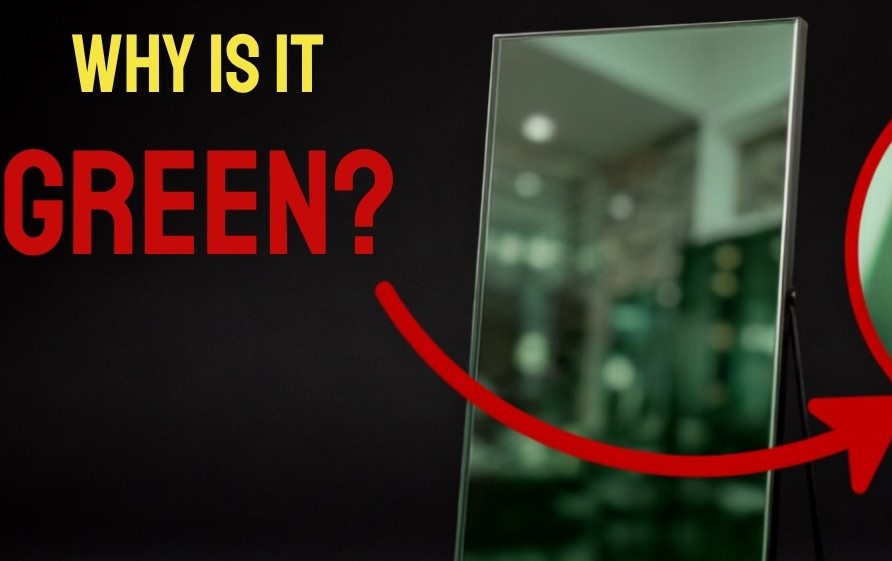
Have you ever looked closely at the edge of a household mirror and noticed a faint emerald tint? It turns out that a mirror is green because of the chemical composition of the soda-lime glass used to make it. While mirrors are designed to reflect nearly all white light, the glass itself absorbs a tiny fraction of the green light spectrum, which becomes visible when light travels through it multiple times.
Picture this. You walk into your bathroom, wash your face, and look into the mirror. It feels completely normal. You look like you. The room looks like the room. But did you know that your mirror is actually playing a sneaky optical trick on you? If you ask most people what color a mirror is, they will likely say silver, white, or simply that it has no color at all.
Yet, science tells us a different story. If you look closely, why is a mirror green? It is one of those fun science facts that sounds like a riddle, but it is entirely true. The reflective surface we use every single day to check our hair actually absorbs and reflects light in a way that gives off a faint green hue. Let us dive into the wonderful world of optics and find out why your favorite looking glass leans toward emerald.
Key Takeaways
- Standard Mirror Composition: Mirrors are typically made of a glass pane with a reflective coating, usually silver or aluminum, applied to the back.
- The Soda-Lime Glass Factor: The glass used in most commercial mirrors contains impurities, primarily iron, which causes the green color.
- Light Absorption and Reflection: As light passes through the glass to reach the reflective backing and bounces back out, it travels through the glass twice.
- The Green Tint Effect: This double-passing amplifies the absorption of red and blue wavelengths, making the reflected light subtly green.
- Infinity Mirror Illusion: When you look into a mirror facing another mirror, the green tint multiplies, turning deep tunnels a vivid green.
- Pure White Glass: Specialized low-iron glass, like starfire glass, eliminates this green tint for a truly colorless reflection.
The Anatomy of a Standard Mirror
To understand why a mirror is green, we need to take a quick look at how a mirror is actually built. When you gaze at a modern mirror, you are not just looking at a shiny metal sheet. You are looking through a transparent barrier.
Layers of a Mirror
Most standard mirrors are made of two main parts. First, there is a flat sheet of glass on the front. Second, there is a very thin layer of reflective metal painted or sprayed onto the back side. Historically, this metal was real silver, which is why we call them silvered mirrors. Today, manufacturers often use cheaper alternatives like aluminum.
When light hits the mirror, it travels through the front glass layer, bounces off the metal coating on the back, and travels back through the glass to reach your eyes. Because light makes a round trip through the glass, the material itself plays a huge role in what you ultimately see.
The Role of Soda-Lime Glass
The glass used for everyday mirrors is not pure. It is a material called soda-lime glass, which is made from silica, sodium oxide, and calcium oxide. Making glass is a massive industrial process, and the raw materials used are never one hundred percent pure.
One of the most common impurities found in the sand used for glassmaking is iron. Even a tiny trace of iron impurities can change how the glass interacts with light. Specifically, iron oxide loves to absorb certain wavelengths of light while letting others pass through.
How Light Interacts with Glass
Light is a spectrum of many colors. When white light from the sun or your ceiling lights hits a mirror, it contains all the colors of the rainbow. But glass is picky about which colors it likes to host.
Visual guide about Why Is a Mirror Green
Image source: a.1stdibscdn.com
The Absorption of Red and Blue
Because of the iron impurities inside soda-lime glass, the material absorbs red and blue light wavelengths very efficiently. When light enters the glass, those red and blue parts of the spectrum get trapped and converted into tiny amounts of heat.
On the flip side, green light does not get absorbed nearly as much. Green light passes right through the glass with very little resistance. Since the red and blue are being filtered out, the light that manages to escape has a noticeable green bias.
The Double Journey of Light
Remember that light has to make a round trip. It goes through the glass once on its way to the silver backing, and it goes through the glass a second time on its way back to your eyes. This double journey doubles the amount of filtering that takes place.
If you look at a thin windowpane, the green tint is practically invisible because the light only passes through once. But in a mirror, the light passes through the glass twice, making the emerald tint much more prominent.
Proving the Green Tint at Home
You do not need a laboratory full of expensive equipment to see this phenomenon for yourself. You can easily test why is a mirror green right inside your own home.
The Edge Test
The easiest way to spot the green color is to look at the edge of a mirror. Most mirrors have exposed edges where the glass was cut. If you peer closely at the side of a thick bathroom mirror, you will almost certainly see a distinct green line.
This happens because the light is traveling sideways through a much longer stretch of glass. The longer the path through the soda-lime glass, the more green light survives compared to red and blue, making the color pop out at you.
The Infinity Mirror Trick
Have you ever stood between two parallel mirrors, like in an elevator or a funhouse? You see an endless tunnel of reflections getting smaller and smaller into the distance.
If you look down that tunnel, you will notice that the reflections do not stay clear. They quickly fade into a deep, ghostly green. This happens because the light bounces back and forth between the two mirrors dozens of times. With each bounce, the light passes through the glass over and over again, multiplying the green filter effect until it becomes impossible to miss.
Can We Make a Truly Colorless Mirror?
If standard mirrors are green, do we have to live with it? Not at all! Science and manufacturing have found ways to bypass the green tint entirely for specific high-end uses.
Low-Iron Starfire Glass
To eliminate the green tint, manufacturers can use ultra-clear glass, often marketed as low-iron glass or starfire glass. By carefully filtering out the iron impurities during the manufacturing process, the glass becomes truly transparent.
Mirrors made with low-iron glass do not have the green edge. They provide a much more accurate, color-true reflection. However, this type of glass is more expensive to produce, which is why your standard everyday wall mirror still uses cheaper soda-lime glass.
Front-Surface Mirrors
Another way to avoid the glass color issue is to change where the reflective coating goes. Instead of putting the metal on the back of the glass, a front-surface mirror puts the reflective layer on the very front.
In this setup, light bounces off the metal instantly without ever passing through the glass barrier. These are often used in telescopes, laser systems, and high-end cameras where absolute precision is required, and every bit of light matters.
Conclusion
So, why is a mirror green? It all comes down to the simple chemistry of glassmaking and the quirky behavior of light. The soda-lime glass we use for everyday mirrors contains tiny traces of iron. When light makes its round trip through the glass to the reflective backing, the iron absorbs red and blue wavelengths while letting green light shine through.
Next time you brush your teeth, take a quick peek at the edge of your mirror. You will spot that subtle green line and remember the neat physics hiding in plain sight. Science is truly all around us, even in the simplest household items!
Frequently Asked Questions
Are all mirrors green?
No, not all mirrors are green. Standard household mirrors are green because they use soda-lime glass with iron impurities, but mirrors made with low-iron glass or front-surface coatings are completely colorless.
Why don’t we notice the green tint in everyday use?
Our brains are great at color correction and normal lighting conditions make the subtle green tint hard to notice unless you look at the edge of the mirror or set up an infinity mirror.
What kind of glass is used to make colorless mirrors?
Colorless mirrors use low-iron glass, also known as optical glass or starfire glass, which removes the iron impurities that cause the green absorption.
Does the green tint affect how we look in the mirror?
It has a very minimal effect, but it does absorb a tiny amount of red and blue light, meaning the reflection is technically slightly less color-accurate than a low-iron mirror.
Why do mirrors in infinity tunnels look deep green?
When light bounces between two mirrors repeatedly, it passes through the glass many times, multiplying the green light filtering effect until it becomes very vivid.
Is silver or aluminum used in modern mirrors?
Most modern commercial mirrors use a thin layer of aluminum because it is cheaper and easier to apply than real silver, though both create the same reflective effect.