Why I Look Good in Mirror but Not in Camera?
Have you ever loved your reflection only to be horrified by a casual snapshot? You are not alone in wondering why you look good in mirror but not in camera. This frustrating phenomenon is caused by a mix of mirror familiarity, camera lens distortion, flat lighting, and psychological self-critique.
Picture this. You walk past a mirror, catch your reflection, and think you look pretty great today. Your hair is sitting just right, your smile is confident, and your skin has a nice glow. Feeling good, you pull out your phone, flip the camera to selfie mode, and snap a picture. Suddenly, the magic vanishes. Who is that person on the screen? Why do your eyes look uneven, your nose looks huge, and your entire face looks completely off?
If this scenario sounds familiar, take a deep breath. You are experiencing one of the most universal modern frustrations. Thousands of people search for answers every day because they look good in mirror but not in camera. It feels like a cruel digital trick. Is the mirror lying to you, or is the camera out to get you? The truth is a fascinating mix of physics, biology, and psychology. Let us break down why this happens and how you can bridge the gap between your mirror self and your camera self.
Key Takeaways
- Mirror Familiarity: You are used to seeing your reversed reflection, making unreversed camera photos look strange to your brain.
- Lens Distortion: Phone cameras use wide-angle lenses close to your face, which warps facial proportions and enlarges noses.
- Lighting Differences: Mirrors usually sit in warm, ambient bathroom light, while cameras capture harsh overhead lights that cast unflattering shadows.
- 3D vs. 2D: Mirrors show you in living, breathing three dimensions, whereas cameras flatten your features into a static 2D image.
- The Mere Exposure Effect: Your brain prefers the face you see every day in the mirror, triggering a negative reaction to new perspectives.
- Micro-Expressions: Posing for a camera makes us tense and stiff, stripping away the natural charm we have when relaxing in front of a mirror.
1. The Psychology of Familiarity and the Mere Exposure Effect
To understand why you look good in mirror but not in camera, you have to start with how your brain processes your own face. Psychologists study a concept called the mere exposure effect. This fancy term simply means that humans tend to prefer things they see most often.
The Reversed Face Phenomenon
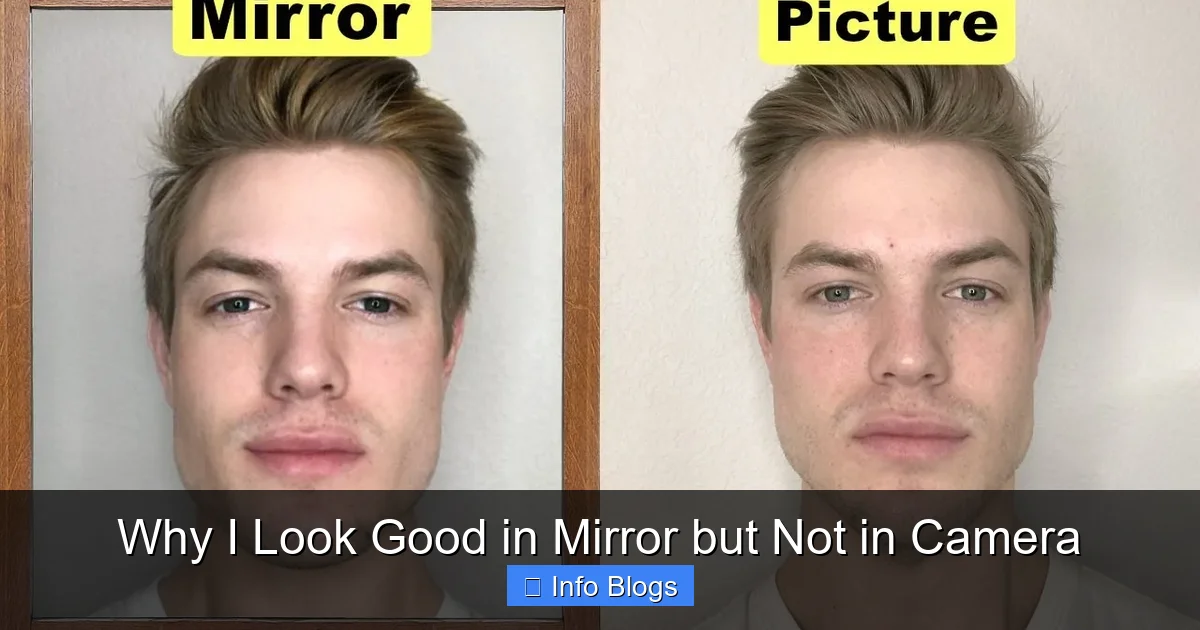
Think about how you interact with mirrors. You look in them every single morning while brushing your teeth, doing your hair, or putting on makeup. Every time you do this, you are looking at a flipped version of your face. Your left eye is on the right side of the glass, and your right eye is on the left.
When a camera takes a picture, it usually captures your unreversed face—the way the rest of the world actually sees you. Because your facial features are slightly asymmetrical (just like everyone else’s), this flipped image looks jarring to your brain. You are so used to the mirror version that the real version looks deformed or crooked to your critical eyes.
The Self-Critique Trap
When you look in the mirror, you are usually moving, smiling, and living your life. You see a dynamic person. When you look at a camera roll, you freeze time and stare at a still frame. You zoom in on pores, minor blemishes, and asymmetrical smiles that nobody else in the real world ever notices. Your brain goes into hyper-critical mode, magnifying every tiny flaw.
2. The Physics of Lenses: How Cameras Warp Reality
Physics plays a huge role in why you look good in mirror but not in camera. Mirrors reflect light waves directly back to your eyes at a one-to-one ratio. Cameras, on the other hand, capture light through glass lenses that alter proportion and depth.
Visual guide about Why I Look Good in Mirror but Not in Camera
Image source: i.ytimg.com
Wide-Angle Distortion
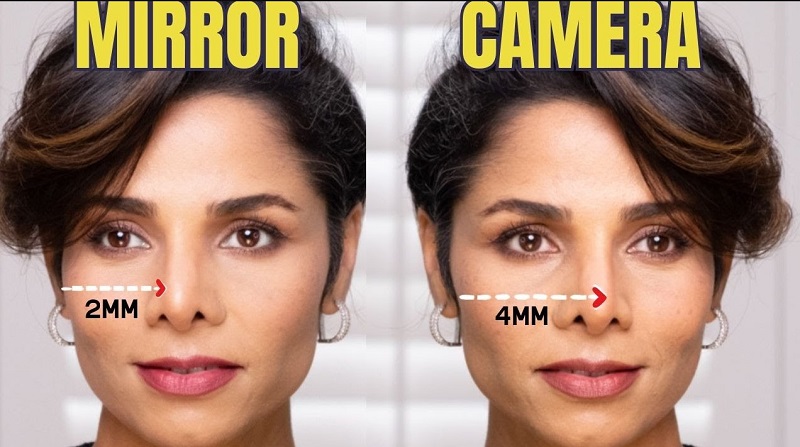
Most smartphone front cameras use wide-angle lenses designed to fit more of the background into the frame. While great for group shots, wide-angle lenses are terrible for close-up portraits. If you hold your phone less than two feet from your face, the lens creates a fisheye effect.
This means whatever is closest to the lens—usually your nose—appears dramatically larger, while your ears and jawline recede into the background. In a bathroom mirror, you stand further back, giving you an accurate, distortion-free view of your true facial proportions.
The Two-Dimensional Flattening
Mirrors show you in glorious three dimensions. Your brain uses depth perception to blend your features harmoniously. A camera crushes all that depth into a flat, two-dimensional square. Shadows that add contour and definition in real life get washed out or exaggerated by a 2D sensor, making your face look wider, flatter, or tired.
3. Lighting Matters: Mirrors vs. Camera Sensors
Lighting can make you look like a Hollywood star or a tired goblin. The lighting setup where you check your mirror is almost always vastly different from the lighting where you snap a photo.
Flattering Bathroom Lighting
Where is your favorite mirror? Usually in the bathroom or vanity area. These spaces typically feature soft, warm, diffused lighting surrounding the mirror. This kind of lighting fills in dark under-eye circles, smooths out skin texture, and adds a warm glow to your complexion.
Harsh Overhead and Digital Lighting
Cameras struggle to capture the full spectrum of human lighting. If you take a selfie under harsh fluorescent office lights or direct overhead kitchen bulbs, the light casts deep, ugly shadows under your eyes, nose, and chin. Instead of looking healthy, you suddenly look exhausted and aged.
4. Posing Stress and The Unnatural Freeze
Have you ever noticed that candid photos of you usually look much better than posed selfies? There is a biological reason for this.
The Fight-or-Flight Selfie Face
When you hold up a phone to take a picture, a subtle shift happens in your body. You stop breathing naturally, your shoulders tense up, your jaw clenches, and your eyes widen into a forced, artificial smile. You are essentially posing under mild stress.
In the mirror, you are relaxed. You are not bracing yourself for a judgment. Your facial muscles are loose, your posture is natural, and your expressions flow organically. Relaxed muscles always look better on a human face than tense, frozen ones.
5. How to Close the Gap Between Mirror and Camera
Now that you know why you look good in mirror but not in camera, you can take practical steps to make your camera photos match your actual beauty. You do not need expensive gear; you just need better techniques.
Change Your Camera Distance
Stop holding your phone right up to your face for selfies. Instead, step back, use the rear camera (it has a better lens than the front selfie camera), and crop the photo later. Or, use a tripod and a timer. Stepping back just three to four feet eliminates wide-angle nose distortion instantly.
Master Your Lighting
Always face a light source when taking a photo. Sit near a large window with natural daylight streaming in. Natural light is the ultimate equalizer. Avoid overhead lights that cast dark shadows under your eyes, and experiment with ring lights if you shoot indoors often.
Flip Your Photos
If unreversed photos drive you crazy because your brain expects the mirror version, try editing your phone settings to automatically mirror your front-facing photos, or use a simple photo editor to flip them horizontally. Sometimes, a simple flip is all it takes to make you love the picture.
Remember that the mirror version is the one people see when they look at you in real life. The camera is just a mechanical box with limitations, angles, and quirks. You are every bit as attractive in person as that bathroom mirror tells you you are.
Conclusion
The eternal struggle of why you look good in mirror but not in camera comes down to a combination of mirror familiarity, wide-angle lens distortion, harsh lighting, and the tension of posing. Cameras do not understand human beauty the way our eyes and brains do. They flatten dimensions, exaggerate close-up features, and freeze us in unnatural moments. The next time a photo disappoints you, remind yourself that the camera is lying, not your reflection. Embrace your real, three-dimensional self, fix your lighting, step back from the lens, and remember that you look amazing.
Frequently Asked Questions
Is my mirror image what other people actually see?
Yes and no. People see your unreversed face, which is what a camera captures. However, because humans are constantly moving and viewing you from multiple angles in 3D space, they perceive your face dynamically, much like you see yourself in the mirror rather than a static, distorted photo.
Why does my nose look so big in selfies?
Your nose looks larger in selfies due to wide-angle lens distortion. Smartphone front cameras are placed very close to your face, causing anything closest to the lens—like your nose—to appear disproportionately magnified compared to the rest of your features.
How can I look more like my mirror self in photos?
To look more like your reflection, step further away from the camera and zoom in slightly to reduce lens distortion. Always face a natural light source like a window, keep your facial muscles relaxed, and try flipping your digital photos horizontally.
Why do candid photos look better than posed selfies?
Candid photos look better because you are relaxed, breathing normally, and making natural expressions. When you pose for a selfie, your body experiences subtle tension, causing your muscles to stiffen and your smile to look forced.
Does everyone hate how they look in pictures?
Almost everyone experiences some level of dissatisfaction with photos of themselves. Psychologists note that our brains prefer the familiar reflection we see every day, making unreversed, flat digital photos feel alien and overly criticized by our own minds.
Should I trust the mirror or the camera?
You should trust the mirror and your in-person interactions. A mirror shows you in true 3D perspective with natural lighting and movement, whereas a camera flattens your features, distorts proportions, and captures you under unflattering digital conditions.