Why Is My Mirror Cloudy After Cleaning? [Learn More]
Are you standing back to admire your freshly wiped glass, only to ask yourself, “Why is my mirror cloudy after cleaning?” Don’t worry, you aren’t alone in this frustrating daily battle. Most of the time, this annoying haze comes down to leftover soap residue, dirty cleaning tools, or the wrong technique. By making a few quick tweaks to your routine, you can easily banish that stubborn film and enjoy a sparkling reflection every single time.
Picture this. You grab a roll of paper towels and your favorite glass spray. You spend a good five minutes scrubbing away toothpaste splatters, hairspray mist, and water spots. You step back, expecting a brilliant shine. Instead, you stare at a milky, hazy mess. It is enough to make anyone sigh out loud. You tilt your head and mutter the age-old question: why is my mirror cloudy after cleaning?
It is one of those annoying little household mysteries that happens to the best of us. You try harder, spray more cleaner, and wipe furiously. Yet, the cloudiness just seems to spread. The good news is that your glass is not actually ruined. Usually, that frustrating film is just a thin layer of chemical buildup, trapped oils, or mineral deposits sitting right on the surface.
In this guide, we are going to look closely at why is my mirror cloudy after cleaning. We will walk through the science of what goes wrong and give you simple, practical steps to fix it. Say goodbye to streaks and hello to a reflection so clear you will barely know the glass is there.
Key Takeaways
- Soap Residue: Old cleaning products leave behind a waxy film that attracts dust and moisture, making your glass look dull.
- Microfiber Matters: Cheap or dirty cleaning cloths trap grease and push it back across the glass instead of absorbing it.
- Water Quality: Hard tap water contains heavy minerals like calcium and magnesium that dry into a cloudy, spotty layer.
- The Right Solution: Simple white vinegar mixed with water cuts through grime far better than heavy commercial sprays.
- Technique Counts: Wiping in circles creates streaks, while an S-pattern sweep ensures a uniform, crystal-clear finish.
- Temperature Control: Cleaning a warm mirror causes your liquid spray to evaporate too quickly, leaving behind dried residue.
The Hidden Culprits Behind a Hazy Reflection
To solve a mystery, you have to find the clues. When you wonder why is my mirror cloudy after cleaning, the answer usually hides in plain sight. It is rarely the fault of the glass itself. It almost always comes down to what you put on the mirror or what you used to wipe it off.
Commercial Glass Cleaner Buildup
Many popular blue glass sprays promise a miracle shine. However, many of these formulas contain heavy waxes, polymers, and synthetic fragrances. When you spray and wipe, a tiny bit of this chemical cocktail stays behind. Every time you clean, another microscopic layer piles on. Over weeks and months, these layers build a thick, waxy film. This film catches light in weird ways and makes your mirror look permanently cloudy, no matter how much you scrub.
The Trap of Dirty Rags
Think about where your cleaning rags live. If they sit in a laundry basket with fabric softener or hang in a dusty utility room, they are already compromised. Fabric softener is a particular enemy of glass. It coats fibers in a thin, greasy layer designed to make your clothes feel soft. When you use that soft towel on a mirror, you are essentially wiping a very thin coat of oil across the glass.
Water Quality and Environmental Factors
Sometimes the issue is not the cleaner at all. Your local environment and the water coming out of your tap play a huge role in how your glass looks after a wipe down.
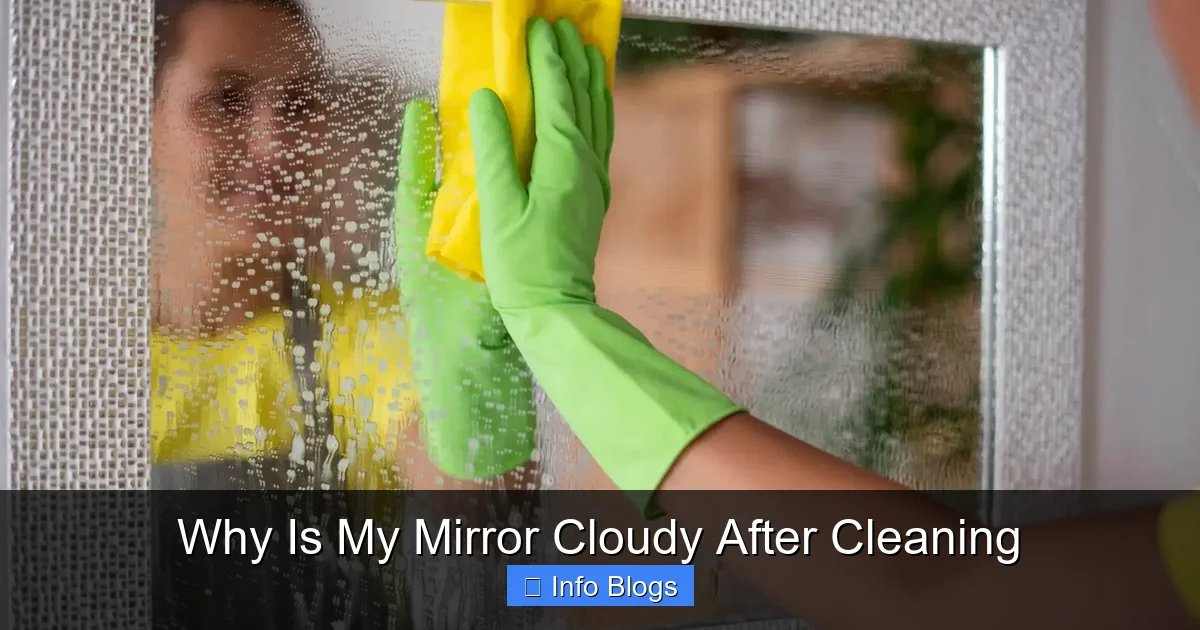
Visual guide about Why Is My Mirror Cloudy After Cleaning
Image source: ercleanservice.com
The Menace of Hard Water
If you live in an area with hard water, your tap water is full of dissolved minerals like calcium and magnesium. When you mix your own cleaners with tap water—or if you use damp tap-water rags—those minerals stay behind as the liquid evaporates. As the water dries, the minerals form a hard, crusty, or powdery white haze. This is a very common answer to the question of why is my mirror cloudy after cleaning with plain water.
Humidity and Temperature Extremes
Bathrooms are hot and humid places. If your mirror is warm from a long, steamy shower and you immediately spray cold glass cleaner on it, the liquid reacts strangely. It evaporates far too fast in certain spots while pooling in others. This rapid, uneven drying traps cleaning agents on the surface before you have a chance to buff them away, leaving behind a cloudy patchwork.
The Best Tools and Techniques for a Streak-Free Shine
Now that you know what causes the haze, let us talk about how to beat it. Fixing the problem is mostly about upgrading your toolkit and changing your physical technique.
Ditch the Paper Towels
Paper towels might seem convenient, but they are terrible for mirrors. They shed tiny paper fibers that stick to the wet glass. Furthermore, many paper towels are treated with lotions or glues during manufacturing. These substances smear across the glass surface. Instead, invest in a couple of high-quality, lint-free microfiber cloths. They grab dirt and moisture without leaving anything behind.
The Power of White Vinegar
If commercial sprays leave a film, what should you use? The answer is sitting in your pantry. A simple, cost-effective mix of equal parts white distilled vinegar and distilled water works wonders. Vinegar cuts right through soap scum, hairspray, and grease without adding waxy polymers. Pour it into a clean spray bottle, and you have a professional-grade mirror cleaner for pennies.
Mastering the Wipe Pattern
How you move your arm matters just as much as what is on your cloth. Avoid circular motions. Circles tend to push dirt around in loops and leave behind semi-circular streaks that show up in the bathroom lighting. Try the S-pattern instead. Start at the top left corner of the mirror, pull your cloth across to the top right, drop down, and sweep back to the left. Continue this snake-like motion all the way to the bottom. This pushes grime off the glass in one uniform direction.
How to Strip Away Old Buildup
If your mirror is so cloudy that standard vinegar spray does not touch it, you are dealing with years of accumulated grime. You need a deep cleaning session to reset the glass.
The Dish Soap Stripping Method
Before you use any glass cleaner, you need to strip away the waxy layers. Fill a bucket with warm water and add just a single drop of mild dish soap. Do not add too much, or you will create a bubble bath on your mirror. Dip a microfiber cloth into the soapy water, wring it out until it is barely damp, and wipe down the entire mirror. Dish soap is designed to cut grease, so it will easily lift away old residue and hairspray mist.
Rinsing and Buffing
Once you strip the grease with dish soap, wipe the mirror down a second time using a clean cloth dampened with plain distilled water to remove any soap traces. Finally, take a dry, fluffy microfiber cloth and buff the surface until it squeaks. This two-step reset will answer why is my mirror cloudy after cleaning by eliminating the root cause for good.
Preventing Future Cloudiness
Once you get your mirror sparkling clean, you want to keep it that way for as long as possible. A little bit of prevention goes a long way in cutting down your cleaning chores.
Smart Bathroom Habits
Hairspray and personal care products are major culprits behind hazy mirrors. When you spray hairspray, body spray, or perfume, the tiny mist droplets float through the air and land on your glass. To prevent this, spray your styling products inside an enclosed area or step away from the vanity. A quick flick of the bathroom exhaust fan during and after showers also keeps excess moisture from baking hard water spots onto the glass.
Routine Maintenance Tips
You do not need a major cleaning session every single day. Keep a dry microfiber cloth tucked away in a bathroom drawer. Give the mirror a quick, dry buff once or twice a week. This removes dust and light splashes before they can dry into stubborn spots. By keeping up with light maintenance, you will rarely have to ask yourself why is my mirror cloudy after cleaning again.
Conclusion
Dealing with a hazy reflection can be immensely frustrating, but it is an easy problem to solve once you understand the root causes. Whether it is old chemical buildup from heavy commercial sprays, hard water minerals, or greasy microfiber towels, the fix is right at your fingertips. By switching to a simple vinegar solution, using proper lint-free cloths, and wiping in a smart S-pattern, you can transform your mirrors from dull and cloudy to brilliantly clear.
Remember that a great cleaning routine does not have to be complicated or expensive. A little bit of knowledge and the right technique go a long way. Take a few minutes to reset your mirror today using these tips, and enjoy that satisfying, crystal-clear shine every time you walk into the room.
Frequently Asked Questions
Why is my mirror cloudy after cleaning with vinegar?
If vinegar leaves a haze, your cloth likely has residual laundry detergent or fabric softener trapped in the fibers. Try washing your microfiber cloths in hot water without any fabric softener, or switch to a completely fresh cloth to buff the surface dry.
Can I use rubbing alcohol to clean a cloudy mirror?
Yes, isopropyl alcohol is fantastic for cutting through grease, oils, and stubborn hairspray residue on glass. Mix equal parts rubbing alcohol and water in a spray bottle for a quick-drying, streak-free cleaning solution that evaporates cleanly.
Why do paper towels make my mirror look streaky?
Paper towels break down as they absorb moisture, leaving behind microscopic paper lint and dust particles. Furthermore, many brands apply chemical softeners during manufacturing that smear into a greasy film across the glass.
How do I get rid of hard water spots on a bathroom mirror?
Hard water spots consist of mineral deposits that require an acidic solution to break down. Spray a 50/50 mix of white vinegar and water onto the spots, let it sit for two minutes to dissolve the minerals, and wipe it away with a microfiber cloth.
Should I use tap water or distilled water for cleaning mirrors?
Distilled water is always the better choice because it lacks the heavy minerals found in tap water. Using tap water often leaves behind a powdery white film as the droplets dry on the glass surface.
Why does my mirror look foggy even when it is dry?
If the glass looks milky even when completely dry, you are likely dealing with a heavy buildup of old cleaning chemical residue. You will need to strip the surface using warm water and a tiny drop of dish soap to remove the waxy layers.