How to Put Up a Heavy Mirror? [Read To Know The Tricks]
Learning how to put up a heavy mirror does not have to be an intimidating DIY project. By using the right hardware, locating wall studs, and following a few basic safety steps, you can secure your large mirror firmly in place. This comprehensive guide will walk you through everything you need to know for a secure installation.
Hanging a decorative mirror can completely transform a room, making small spaces feel larger and bouncing natural light into dark corners. But when you are dealing with a massive, weighty glass piece, excitement can quickly turn into anxiety. What if it crashes to the floor? What if it pulls right out of the drywall? Take a deep breath. Learning how to put up a heavy mirror is a manageable weekend project if you have the right tools and a solid plan.
Many people make the mistake of relying on simple nails or plastic wall anchors meant for lightweight picture frames. A heavy mirror demands respect, proper engineering, and sturdy hardware. Whether you are hanging a vintage floor-length mirror or a heavy bathroom vanity mirror, this guide will walk you through the process step-by-step so you can get the job done right the first time.
Key Takeaways
- Find the Studs: Always anchor your heavy mirror into solid wooden wall studs for maximum weight support.
- Use Heavy-Duty Hardware: Skip the standard picture wire and use heavy-duty Z-bars, French cleats, or mirror clips.
- Safety First: Enlist a helper to hold the mirror while you measure, level, and hang it.
- Check the Weight Limit: Verify that your hanging hardware is rated well above the actual weight of your mirror.
- Level Twice: Use a spirit level multiple times during the process to ensure your mirror hangs straight.
- Inspect the Frame: Make sure the mirror’s backing and hanging loops are structurally sound before mounting.
Gather Your Tools and Materials
Before you even touch the mirror, you need to assemble your toolkit. Trying to improvise with the wrong tools is the fastest way to end up with a cracked mirror or a damaged wall. Take inventory of your supplies and make sure you have everything ready to go.
Essential Hardware
When figuring out how to put up a heavy mirror, your hardware choice is the single most important factor. Standard sawtooth hangers will not cut it here. Instead, look for a heavy-duty French cleat or a Z-bar hanging system. These metal interlocking bars distribute the weight evenly across multiple points on the wall, making them ideal for heavy loads. If your mirror comes with D-ring hangers screwed into the back, make sure they are bolted securely into the wood frame, not just glued or stapled.
Tools for the Job
You will need a reliable electronic stud finder to locate the wooden framing behind your drywall. A spirit level is non-negotiable unless you want a permanently crooked reflection. Grab a power drill with appropriate drill bits, a pencil for marking your spots, safety glasses, and a tape measure. Finally, find a trusted friend or family member to act as your assistant. Hanging a heavy mirror is a two-person job from start to finish.
Assess the Wall and Locate Studs
Location is everything when you are mounting heavy items. You cannot simply trust drywall to hold dozens of pounds of glass and wood without some structural backing. Let us look at how to find the best spot on your wall.
Using a Stud Finder
Pass your electronic stud finder slowly across the wall until it beeps to indicate the edge of a stud. Mark both edges with a pencil, then find the center point. Ideally, you want your heavy mirror hardware to span across at least two wall studs. If your mirror is smaller and only aligns with one stud, you will need to use heavy-duty toggle bolts or drywall anchors rated for the specific weight on the opposite side to prevent pivoting.
Checking for Obstacles
Before you drill into that wall, think about what is hiding underneath the surface. Use a wire and pipe detector if you have one, especially in older homes. You want to avoid drilling directly into electrical wiring or plumbing pipes. Take a close look at baseboard heaters, outlets, and light switches nearby to map out a safe zone for your mirror.
Prepare the Mirror for Hanging
Now that your wall is prepped and you know where the studs are, it is time to look at the mirror itself. Not all mirrors are built the same, and a quick inspection can save you from a nasty surprise.
Inspect the Backing
Flip the mirror over and look at how the hanging hardware is attached. Cheap wire attached with tiny staples is a recipe for disaster. If the current hardware looks flimsy, unscrew it and replace it with heavy-duty D-rings screwed directly into the solid wood frame. Make sure the wire or hanging bar is pulled taut and sits evenly.
Measure Twice, Drill Once
Measure the distance from the top of the mirror to the hanging wire when it is pulled tight. Transfer this measurement to the wall, marking where the top of the mirror will sit. This ensures that when your assistant holds the mirror at your desired height, the hanging hardware matches your wall mount precisely.
Install the Hanging Hardware
This is where precision really matters. Taking your time here guarantees a secure and level installation.
Installing a French Cleat
A French cleat is a two-part bracket. One piece screws onto the back of the mirror, and the matching piece screws onto the wall. Hold the wall cleat against your pencil marks, making sure it intersects with your wall studs. Place your spirit level on top of the cleat to ensure it is completely horizontal. Drive heavy wood screws directly through the cleat and into the studs. Tighten them firmly, but be careful not to strip the wood.
Using Toggle Bolts as a Backup
If your mirror is extremely wide and the studs do not line up with the pre-drilled holes in your hanging system, you must use heavy-duty toggle bolts for the sections that miss the studs. Unlike standard plastic anchors, toggle bolts open up behind the drywall to create a secure clamp that can hold significant weight. Always check the manufacturer weight ratings on your packaging.
Lift and Hang the Mirror
The moment of truth has arrived. With your hardware securely fastened to the wall, it is time to mount the mirror.
Teamwork Makes the Dream Work
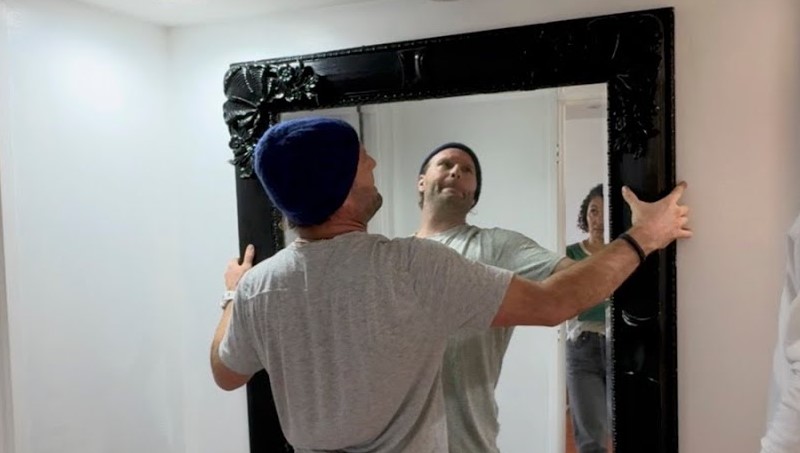
Do not attempt to lift a heavy mirror by yourself. Grab your assistant, lift the mirror together, and carefully guide it toward the wall. Keep the mirror close to your body to maintain a strong center of gravity and protect your back from strain.
Securing the Fit
Lower the mirror slowly onto the French cleat, Z-bar, or hooks. Listen and feel for that reassuring click or flush fit that tells you the hardware has engaged properly. Step back slowly while your assistant still supports a tiny bit of the weight to ensure the wall is taking the load without sagging or pulling. Once you are confident, let go completely.
Final Adjustments and Safety Checks
You are almost finished! Take a moment to step back and admire your handiwork.
Checking the Level
Place your spirit level on top of the mirror frame. Is the bubble dead center? If it is slightly off, many modern hanging systems allow for minor lateral adjustments without having to unscrew the entire wall bracket. Make those tiny tweaks now.
Peace of Mind
Gently press on the bottom corners of the mirror to make sure it does not wobble, lift off the wall too easily, or rattle against the drywall. If you live in an earthquake-prone area, you might want to add a dab of heavy-duty museum putty or discrete bottom brackets to keep the mirror from swinging during minor tremors. Cleaning the glass with a quality microfiber cloth will make your newly hung mirror sparkle and complete the project.
Frequently Asked Questions
Can I hang a heavy mirror on drywall without a stud?
Yes, but only if you use heavy-duty toggle bolts or expanding wall anchors rated for the exact weight of your mirror. However, anchoring into at least one wooden stud is always much safer.
What is the best hardware for a heavy mirror?
A French cleat or Z-bar hanging system is widely considered the best choice because it distributes the weight evenly across a wide horizontal surface.
How high should a heavy mirror be hung?
As a general rule of thumb, the center of the mirror should sit at eye level, which is typically around 57 to 60 inches from the finished floor.
Do I need two people to hang a heavy mirror?
Yes, hanging a heavy mirror is definitely a two-person job to ensure safety, accurate measurements, and proper alignment with the wall mounts.
What if my mirror frame is made of plastic or resin?
Be very careful with non-wood frames, as they may not be strong enough to support the weight of the glass. Never attach hanging hardware directly to a weak plastic or composite frame.
Can I use adhesive to mount a heavy mirror?
Mirror mastic or heavy-duty construction adhesive can be used for flush wall mounting, but it is a permanent solution and requires proper wall prep and temporary bracing while it dries.