How to Remove Bathroom Mirror? [Tips & Tricks]
Learning how to remove bathroom mirror setups can seem daunting, but it is entirely manageable with the right tools and safety gear. Whether your mirror is held up by stubborn construction adhesive or simple metal clips, this step-by-step guide will walk you through the entire process safely. Protect yourself, save money on contractor fees, and get your bathroom ready for a fresh new look today.
Are you tired of that dated, builder-grade slab of glass hanging over your sink? Updating your bathroom is a fun DIY project, and learning how to remove bathroom mirror installations is often the very first step. Many homeowners feel intimidated by this task. After all, large glass panels are heavy, fragile, and sometimes glued so tightly to the wall that they feel permanent.
The good news is that you do not need to hire an expensive contractor to get the job done. With a few basic tools, a little bit of patience, and the right technique, you can take down that old glass safely. In this comprehensive guide, we will break down everything you need to know about how to remove bathroom mirror surfaces without hurting yourself or destroying your drywall.
Key Takeaways
- Safety First: Always wear heavy gloves, safety glasses, and long sleeves to protect yourself from flying glass in case the mirror shatters.
- Know Your Mount: Determine if your mirror is held by simple mounting clips or strong double-sided adhesive glue before starting.
- Protect Your Space: Lay down thick drop cloths or old blankets over your vanity and floor to catch falling glass or debris.
- Use Piano Wire: A long wire or heavy-duty fishing line is the best tool for sawing through heavy adhesive backing behind glued mirrors.
- Enlist a Helper: Large mirrors are heavy and awkward; having a second person support the weight prevents accidents and drops.
- Clean the Wall: Expect some drywall damage when removing glued mirrors, and plan to patch and prime the surface before a new installation.
Preparation and Safety Gear
Before you even touch the glass, you need to prepare your workspace and put on the right safety equipment. Safety should always come first when dealing with large glass panels.
Gathering Your Tools
Having the right tools on hand makes the job go much faster. Depending on your mirror type, you will want to gather safety glasses, thick leather work gloves, a hammer, a utility knife, duct tape, a pry bar, a putty knife, and a long piece of piano wire or heavy fishing line. If your mirror is glued to the wall, a hair dryer or heat gun can also be very helpful.
Gearing Up Properly
Never skip your personal protective equipment. Heavy gloves protect your hands from sharp edges, and safety glasses protect your eyes from unexpected glass shards. Wear long pants, sturdy closed-toe shoes, and a long-sleeve shirt. If the mirror breaks, this simple step prevents nasty cuts and injuries.
Protecting Your Vanity and Floor
Mirrors are slippery and heavy. Clear everything off your bathroom counter. Lay down thick moving blankets, old quilts, or heavy cardboard over your vanity top and the bathroom floor. If a piece of glass drops, these layers will cushion the impact and protect your surfaces from costly damage.
Assessing How Your Mirror is Mounted
Take a close look around the edges of your glass. How it is attached determines your entire game plan for how to remove bathroom mirror units.
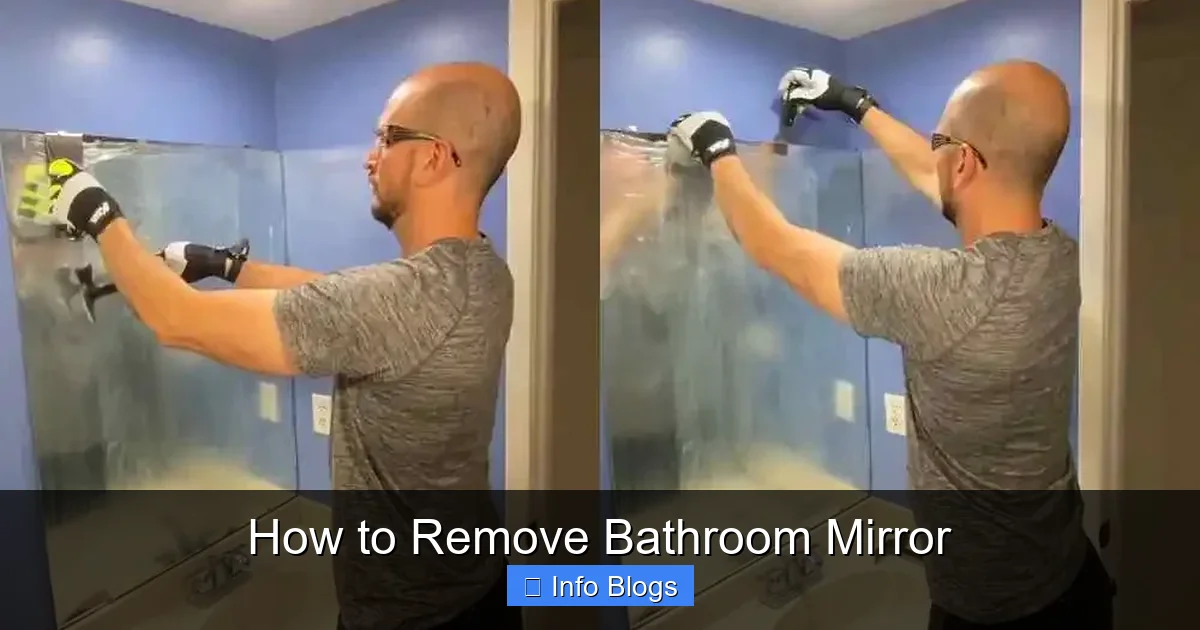
Visual guide about How to Remove Bathroom Mirror
Image source: renoaider.com
Checking for Clips and Screws
Look at the top, bottom, and sides of the glass. Do you see metal or plastic brackets holding the edges in place? If yes, you have a clipped mirror. These are the easiest to take down because they do not rely on heavy glue.
Checking for Adhesive Glue
If you see no clips, screws, or brackets, your mirror is likely glued directly to the drywall using heavy-duty mastic or mirror adhesive. These require a bit more muscle and special techniques to detach from the wall without tearing the drywall to pieces.
Method 1: Removing a Clipped Bathroom Mirror
If your mirror is held up by clips, you are in luck. This method takes only a few minutes and requires minimal physical exertion.
Loosening the Clips
Grab a screwdriver that matches the screws on your mounting clips. Start by loosening the screws on the top and side clips, but do not remove them completely just yet. Leave the bottom clips tight for the moment to support the weight of the glass.
Taping the Glass
As an extra safety precaution, apply a crisscross pattern of heavy-duty duct tape across the entire face of the mirror. If the glass happens to crack or slip while you are working, the tape will hold the shards together and prevent them from flying everywhere.
Lifting the Mirror Free
Ask a helper to hold the mirror steady with both hands. Unscrew the bottom clips completely. Gently tilt the top of the mirror slightly away from the wall, lift it straight up out of the bottom channel, and carefully carry it out of the bathroom.
Method 2: Removing a Glued Bathroom Mirror
Glued mirrors are notoriously stubborn. The adhesive backing bonds strongly to the drywall paper. Learning how to remove bathroom mirror surfaces attached with glue takes time, so do not rush.
Taping and Securing
Just like with clipped mirrors, cover the entire surface with duct tape in an X shape. This reinforces the glass structure while you apply pressure and pry at the edges.
Using Piano Wire or Fishing Line
Slide a piece of piano wire or heavy braided fishing line behind one top corner of the mirror. Have two people hold the ends of the wire, pulling it taut against the back of the glass. Use a sawing motion to slide the wire down behind the mirror, slicing through the sticky globs of glue.
Applying Heat
If the glue is too tough, use a hair dryer or heat gun on a medium setting to warm the glass. Heat softens many types of construction adhesives. Move the heat source slowly across the mirror surface near the glue spots, but do not hold it too close to the drywall.
Prying Gently
Once you have cut through most of the adhesive with your wire, slide a wooden wedge or a putty knife into the gap. Gently tap it with a hammer to create more space. Never use excessive force, or the mirror will shatter.
Cleaning Up and Preparing the Wall
Once the mirror is safely out of the room, your job is only half done. Now you need to deal with what is left behind on the wall.
Dealing with Torn Drywall
Glued mirrors almost always rip off the top layer of drywall paper. Do not panic; this is completely normal. Scrape away any remaining chunks of old adhesive or foam tape using a stiff putty knife.
Patching and Priming
Apply a thin coat of joint compound over the damaged areas of the drywall to smooth out the surface. Let it dry completely, sand it down until it feels flush with the surrounding wall, and apply a coat of primer. Once primed, your wall is ready for paint, wallpaper, or your brand new mirror.
Conclusion
Tackling home renovation projects yourself is a great way to build confidence and save money. Knowing how to remove bathroom mirror installations gives you the freedom to update your space on your own schedule. Whether you are dealing with simple mounting brackets or heavy construction glue, taking things slow and prioritizing safety ensures a successful project. Grab your gear, call a friend to help lift, and enjoy transforming your bathroom today.
Frequently Asked Questions
Can I remove a bathroom mirror by myself?
While it is technically possible for small mirrors, it is never recommended to work alone. Large mirrors are heavy, awkward, and extremely fragile, so having a second person makes the process much safer.
What tools do I need to remove a glued mirror?
You will need safety glasses, thick work gloves, duct tape, piano wire or heavy fishing line, a putty knife, a hammer, and optionally a hair dryer or heat gun to soften the adhesive.
How do I stop the mirror from shattering?
Applying a grid of heavy-duty duct tape across the front glass surface is the best way to keep shards together if the mirror accidentally cracks during removal.
What causes drywall damage during mirror removal?
Mirror adhesive creates an extremely strong bond with the paper facing of drywall. When the mirror is pulled away, it naturally takes that top layer of paper with it, requiring a bit of patching.
Can I reuse a glued bathroom mirror?
It is very difficult to remove a glued mirror without cracking it or bending it, which distorts the reflection. For this reason, most people replace glued mirrors rather than trying to save them.
How do I dispose of an old bathroom mirror?
Wrap the entire mirror securely in heavy cardboard or a thick blanket, and check with your local waste management facility regarding rules for glass disposal in your area.