Are Mirrors Portals? [Read to Know the Truth about this]
Have you ever stared into a shiny glass surface and wondered if mirrors portals to another dimension really exist? While modern science tells us they are simply reflective tools made of glass and silver, human imagination has treated them as gateways to the unknown for thousands of years. From ancient folklore to creepy urban legends, our obsession with what lies beyond the looking glass remains as strong as ever.
Picture this. You wake up in the middle of the night. The house is dark and quiet. You walk into the bathroom, catch a glimpse of your own face in the glass, and a sudden shiver runs down your spine. For a split second, a strange thought pops into your head. What if that shiny surface is not just a reflection? What if mirrors portals to other worlds are actually real?
It is a question that has crossed almost everyone’s mind at least once. We grow up reading fairy tales about stepping through glass into magical realms. We watch sci-fi thrillers where characters vanish into shiny walls. Naturally, our curious brains start to blur the line between fantasy and reality. But what is the actual truth behind these mysterious reflective objects?
Today, we are going to dive deep into this captivating topic. We will explore the physics of light, ancient superstitions, pop culture myths, and the creepy psychological reasons why we love to scare ourselves with the idea of mirror portals. Grab a cup of coffee, settle into your favorite chair, and let us uncover the secrets of the looking glass together.
Key Takeaways
- Scientific Reality: Mirrors are not portals; they are simply smooth surfaces that reflect light waves according to the laws of physics.
- Cultural Folklore: Ancient civilizations believed mirrors held magical properties, trapping souls or offering glimpses into the spirit world.
- Literary Influence: Pop culture and books like Alice Through the Looking Glass cemented the idea of mirrors portals in our collective imagination.
- Optical Illusions: The “infinity mirror” effect creates a visual tunnel that tricks our brains into thinking a gateway exists.
- Urban Legends: Creepy games like Bloody Mary play on our deep-seated psychological fears about the reflection in the dark.
- Quantum Theories: Theoretical physics occasionally plays with multi-dimensions, but practical mirror portals remain firmly in the realm of science fiction.
The Science of Reflection: How Mirrors Actually Work
Before we can talk about secret dimensions, we need to understand the basic science. When you look at a mirror, you are not looking through a window. You are looking at a bounce. It all comes down to physics, chemistry, and how our human eyes process light.
The Physics of Light Waves
Light travels in straight lines until it hits an object. When light rays from a lamp, the sun, or a phone screen hit a smooth surface, they bounce back off at the exact same angle they came in. This is called the law of reflection. Because the glass is so smooth and backed with a thin layer of reflective metal—usually aluminum or silver—the light bounces back in a uniform way. Your brain takes those bounced light rays and translates them into a visual image that looks like a duplicate room sitting behind the glass.
Why Glass and Silver Create the Magic
To make a good reflector, you need two main ingredients: a clear, flat piece of glass and a shiny chemical coating. The glass protects the delicate metallic layer and gives the surface its smoothness. The silver or aluminum coating does the heavy lifting by trapping and bouncing almost all the light that hits it. There is no empty space behind that coating. There is just more glass, more backing, and the wall. From a purely scientific standpoint, mirrors portals do not exist because the physical barrier is solid and impenetrable.
Ancient Beliefs and Superstitions
Even though science tells us there is nothing magical about a piece of coated glass, humans have believed in the mystical power of mirrors for thousands of years. Long before modern physics, our ancestors looked into reflective pools of water and shiny obsidian stones with a mix of awe and terror.
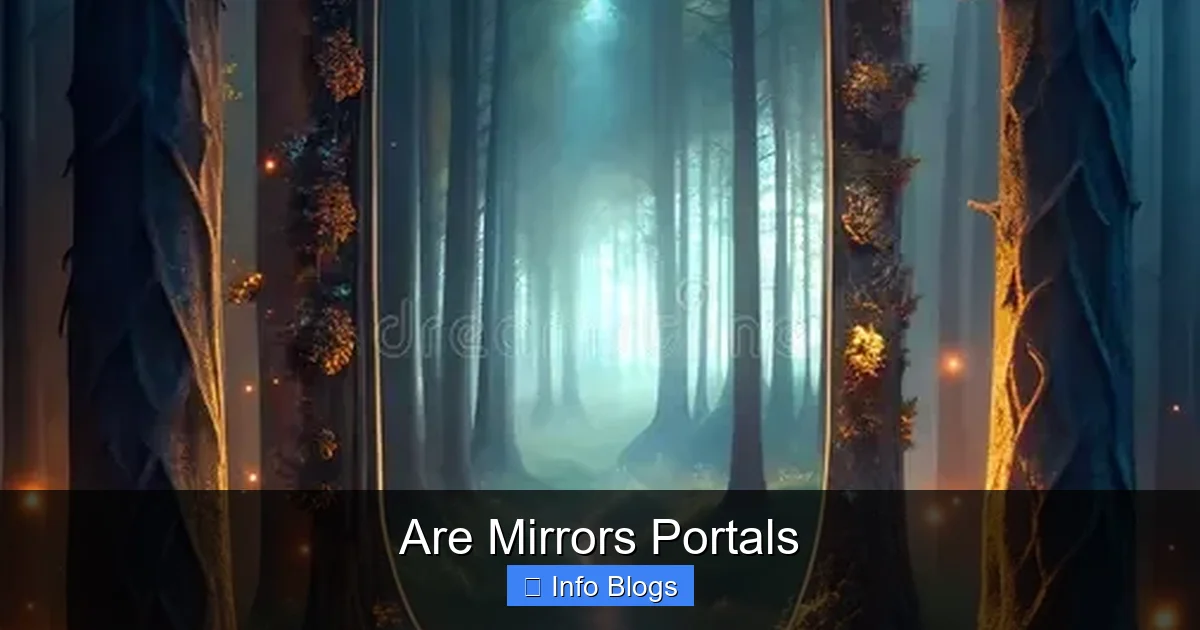
Visual guide about Are Mirrors Portals
Image source: thumbs.dreamstime.com
Mirrors as Soul Catchers
Many ancient cultures believed that a reflection was not just a visual trick, but a literal copy of a person’s soul. This belief birthed dozens of common superstitions that many people still joke about today. For example, why do people say breaking a mirror brings seven years of bad luck? The ancient Romans believed that the body regenerated its physical life every seven years. Therefore, breaking the physical reflection meant damaging the soul, requiring a long healing period.
Divination and Scrying
In medieval times, mystics used shiny surfaces for a practice called scrying. They would gaze into dark mirrors, polished metal, or bowls of water to look into the future, talk to spirits, or find lost items. People genuinely believed that if you stared long enough, the reflective surface would thin out, acting as a portal to the spiritual realm. These historical traditions laid the groundwork for how we view mirrors in modern horror stories and folklore.
Pop Culture and the Myth of the Portal
If you want to know why so many people wonder if mirrors portals are real, you just have to look at our entertainment history. Authors, filmmakers, and artists have spent centuries feeding our imaginations with tales of what hides on the other side.
Alice Through the Looking Glass
Perhaps the most famous literary example is Lewis Carroll’s classic novel, Through the Looking Glass. In the story, young Alice presses her hand against the parlor mirror, watches it turn into a silvery mist, and steps right through into a bizarre chess-piece world. This vivid imagery captured the hearts of millions of readers. It planted the seed in generations of children that if you just push hard enough, the solid glass might give way.
Modern Movies and Television
Sci-fi and horror movies love to use reflective surfaces as gateways. Think about supernatural thrillers where ghosts crawl out of the bathroom sink, or adventure films where heroes step into alternate universes by tapping a magical glass wall. These visual effects are so convincing that they trick our subconscious minds. Even though our logical brain knows it is just CGI and special effects, a tiny part of us remembers those spooky movie scenes every time we walk down a dark hallway at night.
The Psychology of Fear: Why Mirrors Creep Us Out
Have you ever stared at your own face in a dimly lit room for a few minutes? If you have, you probably noticed something unsettling. Your features start to distort, your eyes look strange, and you might even start to feel like a complete stranger. Psychologists have a fascinating name for this, and it explains a lot about our fear of mirror portals.
The Troux Effect and Visual Distortion
When your eyes are starved of changing light and movement, your brain stops processing visual input normally. This is called the Troxler fading effect. When applied to a reflective surface, it creates strange optical illusions. Your brain starts editing out parts of your face, making you look like a monster or a ghost. This natural biological quirk is enough to convince an anxious mind that something supernatural is happening.
The Uncanny Valley and Doppelgangers
Humans are hardwired to recognize faces, especially our own. However, seeing ourselves from an outside perspective triggers a psychological phenomenon known as the uncanny valley. We recognize the face, but because it is flipped and detached from our physical body sensations, it feels alien. This slight disconnect creates a spooky feeling, making us wonder if the reflection has a life of its own. It is no wonder we invent stories about mirrors portals when our own brains play these kinds of tricks on us.
Urban Legends and Creepy Internet Games
It is impossible to talk about this topic without mentioning the classic games and urban legends that scare teenagers at sleepovers. These spooky rituals rely heavily on the suspense and mystery surrounding reflective surfaces.
The Legend of Bloody Mary
You have almost certainly heard of Bloody Mary. The legend says that if you stand in front of a dark bathroom mirror, light a candle, and chant a name a certain number of times, a terrifying entity will appear in the glass. While millions of kids have tried this over the years, nobody has ever found a real monster. The spooky atmosphere, low lighting, and racing heartbeats are simply classic ingredients for a great scare.
The Infinity Mirror Illusion
Have you ever stood between two parallel mirrors in a clothing store dressing room or a funhouse? You see an endless tunnel of reflections stretching on into infinity. This optical illusion makes you feel like you are looking down a long, deep corridor that goes on forever. While it looks like a magical doorway to another dimension, it is just light bouncing back and forth between two parallel surfaces. It is a fun, harmless way to experience the illusion of a portal in real life.
Conclusion
So, are mirrors portals? From a strict scientific and physical standpoint, the answer is a definitive no. They are simply clever tools made of glass and metal that bounce light waves to show us a flipped version of our own world. There are no secret dimensions, no hidden monsters, and no magical pathways waiting behind your bathroom vanity.
However, the human imagination is a powerful thing. Our love for mystery, our respect for ancient traditions, and our enjoyment of a good scare keep the magic of the looking glass alive. Whether you see them as everyday hygiene tools or spooky gateways to another realm, mirrors will always hold a special, enchanting place in our culture. The next time you catch your reflection in the dark, remember the science—but feel free to enjoy a little bit of the mystery, too!
Frequently Asked Questions
Are mirrors actually portals to another dimension?
No, scientifically speaking, mirrors are just glass surfaces coated with a reflective metal layer. They bounce light rays to create a visual reflection, and no physical gateways exist behind them.
Why do mirrors look so creepy in the dark?
Low lighting tricks your eyes and brain through a process called the Troxler fading effect. This optical illusion distorts your facial features, making your reflection look strange or unsettling.
Where did the superstition about breaking mirrors come from?
Ancient Romans believed that human life regenerates every seven years. Since they thought reflections held a piece of the soul, breaking a mirror meant damaging that soul for seven years.
Can you create an illusion of a portal using mirrors?
Yes! Placing two parallel reflectors opposite each other creates an infinity mirror effect. This bounces light back and forth to form a visual tunnel that looks like a deep doorway.
Why do scary stories always feature reflective surfaces?
Reflectors create a sense of the unknown because they show a duplicate version of reality. This psychological disconnect triggers the uncanny valley effect, making them perfect for horror tropes.
What is scrying?
Scrying is an ancient practice where mystics gazed into shiny surfaces like dark glass or water bowls. They believed this helped them predict the future or communicate with spirits.