When Do Babies Recognize Themselves in the Mirror?
Curious about when do babies recognize themselves in the mirror? Most infants do not realize the reflection they see is their own until they are around 18 to 24 months old. Before this milestone, they might smile, coo, or try to play with the baby in the glass, thinking it is just another playful playmate. Understanding this developmental journey helps parents support their little one’s growing sense of self-awareness.
Have you ever held your tiny infant up to a looking glass and watched them smile, babble, or try to kiss the glass? It is a precious moment that makes every parent melt. Naturally, this adorable interaction leads to a very common question: when do babies recognize themselves in the mirror?
It feels like it should happen right away, but the journey to self-awareness is actually a slow and fascinating process. Your baby does not pop into the world knowing that the cute face looking back at them belongs to their own body. Instead, understanding who they are takes time, brain growth, and plenty of everyday experiences.
In this article, we will explore the timeline of how babies learn to see themselves. We will look at the science behind mirror play, fun ways to encourage this milestone, and what you can expect as your little one grows from a curious infant into a self-aware toddler.
Key Takeaways
- Milestone Age: Most children recognize themselves in the mirror between 18 and 24 months of age.
- Early Reactions: Younger infants under six months old are usually fascinated by faces in mirrors but think it is another baby.
- The Rouge Test: Psychologists use a famous dot test with lipstick or a sticker to scientifically prove self-recognition.
- Cognitive Growth: Mirror self-recognition is a major sign of developing visual-spatial and cognitive self-awareness.
- Brain Development: This ability requires complex brain maturation, particularly in areas related to memory and identity.
- Playful Interaction: You can help your toddler develop self-awareness through fun games and interactive mirror play.
The Timeline of Mirror Awareness
Babies do not wake up one day and suddenly understand reflections. Their journey with the looking glass changes quite a bit during their first two years of life. Let us break down what you can expect at different ages.
0 to 6 Months: Fascinated by Faces
When your baby is a newborn, their eyesight is still quite blurry. They cannot see far away, but they love high-contrast images and human faces. By the time they reach three to six months, their vision improves, and they find mirrors captivating.
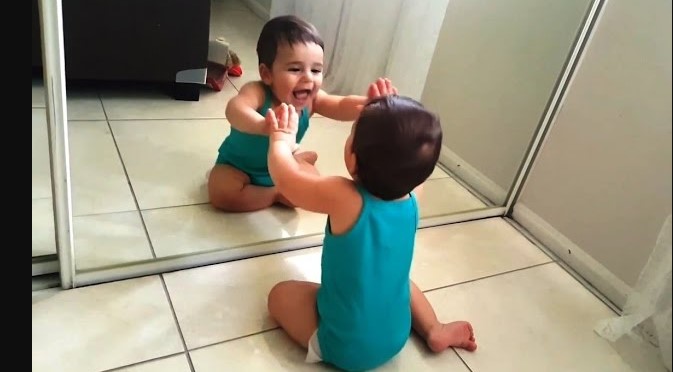
If you hold a young infant up to a mirror, they will likely smile, coo, and reach out to touch the surface. However, they do not realize they are looking at themselves. To your baby, that reflection is just another fascinating playmate who is copying their every move. They might even look behind the glass to find the other baby!
6 to 12 Months: Socializing with the Reflection
As your baby grows into an older infant, mirror time becomes a social event. They will laugh, babble, and try to interact with the image in the glass. They might bang on the mirror or try to share a toy with the reflection.
During this stage, babies start to notice cause and effect. They realize that when they wave their hand, the hand in the mirror waves back at the exact same time. This is a huge clue for them, but they still lack the cognitive maturity to say, “Hey, that is me!”
12 to 18 Months: Confusion and Curiosity
Around their first birthday, babies enter a funny stage of curiosity and confusion. They might still treat the reflection like a friend, but they also start to test the rules of physics. They will look away from the mirror to find you, or look at you in the reflection and then at you in real life.
They are beginning to put the pieces together, but the complete picture of self-identity has not quite formed yet. They know something interesting is happening, but they are not entirely sure what it is.
The Magic Milestone: 18 to 24 Months
So, when do babies recognize themselves in the mirror definitively? The magic usually happens somewhere between 18 and 24 months of age. This is when the lightbulb truly turns on in their growing brains.
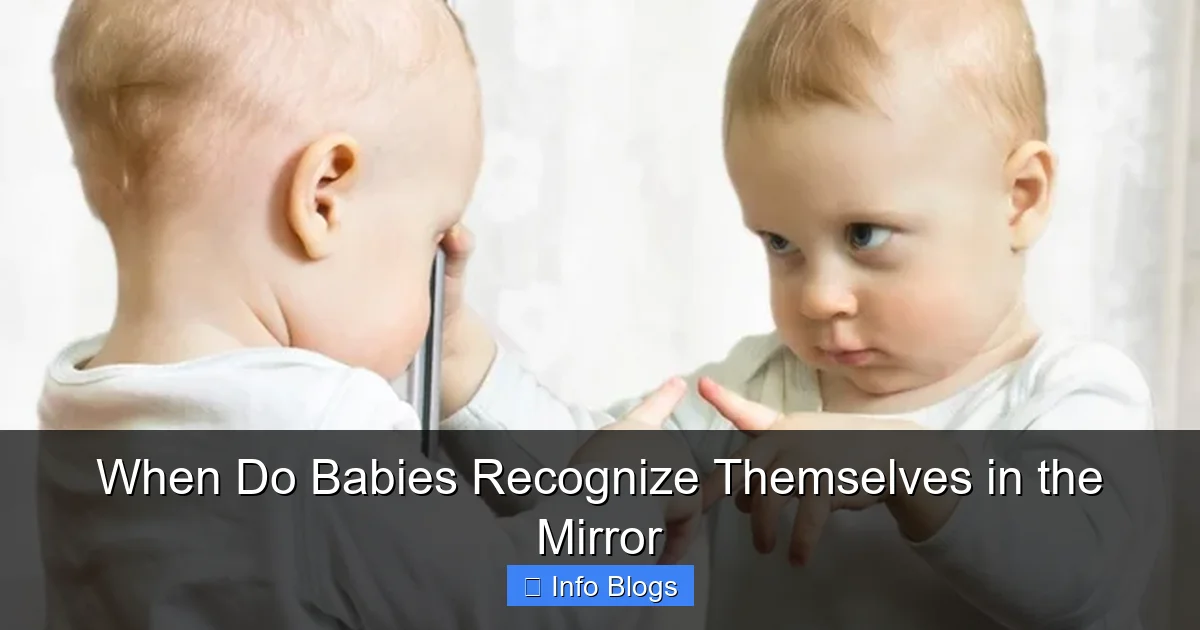
Visual guide about When Do Babies Recognize Themselves in the Mirror
Image source: momtastic.com
What Changes in the Brain?
A lot of development happens behind the scenes during the second year of life. The brain forms new neural connections that allow for complex thought, memory, and a sense of “me” versus “others.”
Your toddler is no longer just reacting to visual stimuli. They are forming a mental image of their own body. They understand that they take up space in the world, that they have unique features, and that the person in the mirror is a direct representation of that mental image.
How Psychologists Prove It: The Rouge Test
You might wonder how experts figured out this timeline. Psychologists use a famous experiment called the “rouge test” or the “mirror test” to study self-recognition.
Here is how it works: while a toddler is sleeping or distracted, a researcher puts a small dot of lipstick, blush, or a sticker on the child’s forehead or nose. Then, they place the child in front of a mirror.
If the child is younger than 18 months, they might touch the dot on the mirror or ignore it entirely. But if the child is 18 to 24 months old, they will usually reach up and touch their own nose or forehead. They realize that the mark on the reflection belongs to them, proving they have achieved true self-recognition.
Signs Your Toddler Is Developing Self-Awareness
Recognizing yourself in a looking glass is just one part of a bigger picture called self-awareness. Once your child hits this stage, you will notice several other fun milestones popping up in daily life.
Using Pronouns and Names
Around the time they figure out mirror reflections, toddlers also start using personal pronouns. Instead of talking about themselves in the third person—like “Baby wants a snack”—they begin saying “I want a snack” or “Me do it.”
They also start recognizing themselves in photographs and home videos. If you show them a picture of themselves as a newborn, they might point and say their own name or laugh with delight.
Showing Pride and Embarrassment
Self-awareness brings a whole new set of emotions. Once children know who they are, they can experience self-conscious emotions like pride, embarrassment, and even guilt.
You might catch your toddler showing off a new pair of shoes in the mirror, clearly feeling proud of how they look. On the flip side, they might cover their face and giggle if they do something silly and realize people are watching.
Fun Ways to Encourage Self-Recognition
You do not need to flashcards or special toys to help your child develop self-awareness. Everyday play and simple interactions are the best tools for supporting this important cognitive milestone.
Play Mirror Games
Make mirror time a fun, interactive game. Sit with your baby in front of a safe, shatterproof mirror and play peek-a-boo. Point to their nose, eyes, and tummy, and say their name out loud.
You can make funny faces, wear silly hats, or wiggle your fingers together. These playful activities help your baby connect the physical movements they feel inside their body with the visual image they see in the glass.
Talk About Reflections
Narrate what you are seeing when you look in the glass together. Point to the reflection and say, “Look, there is Leo! Can you wave to Leo?”
Over time, your child will start associating their name and image together. Use mirrors around the house during diaper changes, tummy time, or playtime to keep the conversation going.
Common Variations and What to Remember
Every child develops at their own unique pace. While the 18 to 24-month window is a great general guideline, do not panic if your little one takes a bit longer to pass the mirror test.
Every Child Is Different
Some children are early talkers and walkers, while others focus their energy on fine motor skills or social bonding. A child who reaches the mirror milestone a few months later than average is usually just fine.
If you have any serious concerns about your child’s overall development, vision, or social interactions, always chat with your pediatrician during your regular check-ups.
Ultimately, enjoying the journey is what matters most. Watch the way your baby interacts with the world, celebrate the small steps, and enjoy those sweet, smiling moments in front of the looking glass.
Conclusion
The question of when do babies recognize themselves in the mirror reveals an incredible journey of human development. From smiling at a perceived playmate at six months old to proudly touching a sticker on their own forehead at two years old, your child undergoes a massive transformation in self-awareness.
Remember that this milestone is just one piece of the puzzle. Every baby grows at their own speed, bringing unique personality and joy to the adventure. Keep playing, keep talking, and enjoy watching your little one discover the wonderful person they are becoming.
Frequently Asked Questions
Do babies think a mirror image is another baby?
Yes, infants under six months old usually view their reflection as another baby. They may smile, coo, or try to interact with the image because they lack the cognitive maturity to understand reflections.
Are mirrors safe for newborns and infants?
Mirrors are wonderful for development as long as they are safe and shatterproof. Always use acrylic or baby-safe mirrors and supervise your infant during mirror play to ensure they do not pull heavy glass down.
What is the red dot test for babies?
The red dot test, or rouge test, is a scientific experiment where a mark of lipstick or a sticker is placed on a child’s forehead. Children who recognize themselves will touch their own head, proving self-awareness.
Why do some babies ignore the mirror?
Some infants and toddlers simply find other toys more interesting and may ignore a mirror. This is completely normal and does not indicate any developmental delay in self-awareness.
When do toddlers start using their own name?
Most children start recognizing their name and using self-referential pronouns like “I” or “me” between 18 and 24 months. This happens right around the same time they achieve mirror self-recognition.
Can mirror play help with language development?
Yes, mirror play is a great tool for language skills. You can point to body parts, say your baby’s name, and talk about what you see, which helps build their vocabulary and social understanding.