Is the Mirror or Camera More Accurate? [Read To Know]
Have you ever looked in the mirror and loved your reflection, only to hate the way you look in a photo? It is a common dilemma that leaves many people wondering if the mirror or camera is more accurate. The truth is that both distort your features in different ways due to physics, lighting, and psychology. Understanding the science behind your reflection and photographs can help you finally make peace with your true appearance.
Picture this scenario. You step out of the shower, catch a glimpse of yourself in the bathroom mirror, and think you look pretty great today. Later on, a friend snaps a candid photo of you on their smartphone. You look at the picture and feel an immediate wave of shock. Is that really what I look like? Why do I look so strange, asymmetric, and completely different than I do at home?
This exact moment of digital betrayal happens to millions of people every single day. It sparks a timeless debate about how we perceive our own looks. People constantly ask the big question: is the mirror or camera more accurate? The answer might surprise you, because the reality is that both lie to you in unique ways. Neither your bathroom mirror nor your phone camera gives you an absolute, objective view of your true face.
To solve this mystery, we need to dive into the fascinating worlds of physics, optics, and human psychology. We will explore how mirrors reflect light, how camera lenses capture images, and why your brain plays tricks on you every time you look at a reflective surface. By the end of this guide, you will understand why you look so different in pictures and how to stop stressing over it.
Key Takeaways
- The Mirror Flips Your Image: Mirrors show a horizontal reversal of your face, which makes you look different than how other people see you in real life.
- Cameras Compress 3D to 2D: Cameras flatten three-dimensional faces into two-dimensional images, which often alters how our features and proportions appear.
- Focal Length Matters: Camera lenses with short focal lengths cause wide-angle distortion, making noses look larger and warping facial features.
- The Mere Exposure Effect: You are psychologically conditioned to prefer your mirrored reflection because that is the version of your face you see every single day.
- Lighting Changes Everything: Both mirrors and cameras are heavily impacted by lighting angles, shadows, and color temperatures, which dramatically alter your perceived appearance.
- Neither Is 100 Percent Accurate: Both mediums present an imperfect version of your reality, meaning your true appearance is actually somewhere right in the middle.
Understanding the Mirror Reflection
Let us start with our trusty everyday companion, the bathroom mirror. For centuries, humans have relied on mirrors to check their hair, brush their teeth, and apply makeup. We trust our mirrors implicitly. But how does a mirror actually work, and does it show a true-to-life depiction of your face?
The Science of Lateral Inversion
When you stand in front of a mirror, the glass reflects light waves back to your eyes. However, mirrors do not create a direct copy of you. Instead, they create a laterally inverted image. This means your left side becomes your right side, and your right side becomes your left side.
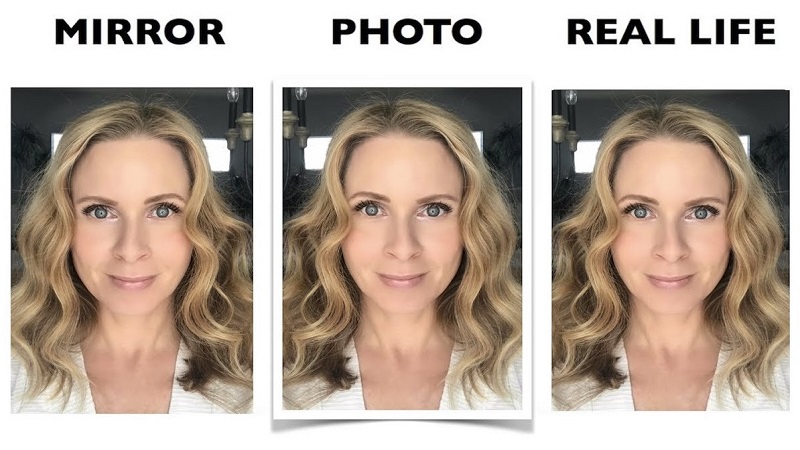
Because human faces are naturally asymmetric, this flip makes a massive difference. You are so used to seeing your reversed face in the mirror that your brain accepts it as the normal standard. When someone looks at you in real life, they see your non-reversed face. When a camera takes a picture, it often captures your non-reversed face too. This sudden switch is the primary reason why photos feel so jarring and unfamiliar to us.
Distance and Depth Perception
Mirrors also play tricks with your depth perception. When you look into a mirror, your eyes focus on a point behind the glass, equal to the distance between you and the mirror surface plus the distance from the mirror to your eyes. This optical depth creates a three-dimensional experience that mimics real life much better than a flat screen ever could. You can move your head around, change your angle, and your reflection responds instantly in real-time space.
The Mechanics of the Camera Lens
Now let us look at the modern smartphone camera. We carry high-powered lenses in our pockets all day long, taking selfies and group shots constantly. Yet, many of us despise the results. Why do cameras make us feel so insecure? The technology behind the lens holds the key.
The Flattening Effect of Two Dimensions
The human world is strictly three-dimensional, but cameras capture the world in two dimensions. To do this, a camera must compress depth. This compression flattens your features. A nose that looks balanced in a 3D mirror might suddenly look prominent and large when flattened onto a 2D smartphone screen. This flattening effect is one of the main reasons people feel that cameras distort their facial structure.
The Impact of Focal Length and Lens Distortion
Have you ever noticed how your face looks different depending on how close you hold the camera for a selfie? This is all about focal length. Smartphone front-facing cameras typically use wide-angle lenses, often around 24mm to 28mm. These lenses are designed to capture a wide field of view, but they introduce severe optical distortion.
If you hold a wide-angle camera close to your face, anything closest to the lens—usually your nose—appears dramatically enlarged. Meanwhile, your ears and the sides of your face recede into the background. To get a truly accurate representation of your face on a camera, you need a telephoto lens with a focal length of 85mm or higher, shot from several feet away. This is why professional portraits taken by a photographer with a real camera often look much better than a quick smartphone selfie.
The Psychology Behind How You See Yourself
Physics and optics are only half of the puzzle. The way you perceive your appearance is heavily influenced by psychology and the quirks of the human brain. Even if a camera or mirror showed you a completely objective image, your brain would still find a way to judge it.
The Mere Exposure Effect
Psychologists have a name for why you prefer your mirror reflection: the mere exposure effect. This psychological phenomenon states that people tend to develop a preference for things simply because they are familiar with them. You look in the mirror multiple times every single day. You know every freckle, contour, and angle of your reversed reflection. That familiar image becomes your baseline for what you think you look like.
When a camera takes a photo, it shows you the unreversed version of your face. Because you rarely see this version of yourself, your brain immediately flags it as unfamiliar and wrong. You might spot tiny asymmetries that your brain is not used to seeing, leading you to think the photo looks terrible, even if other people think it looks completely normal.
Micro-Expressions and Posing Habits
Another psychological factor is control. When you look in the mirror, you are an active participant. You unconsciously tilt your head, raise your eyebrows, or adopt your best smile. Your brain associates your reflection with these flattering micro-expressions. In contrast, candid photos catch you off guard. You might be mid-blink, talking, or resting your face in a neutral expression. Seeing a resting, unposed version of yourself can be a shocking experience.
Lighting, Environment, and Color Accuracy
Lighting is the unsung hero—or villain—of both mirrors and cameras. You can have the most advanced camera lens or the clearest mirror in the world, but if the lighting is terrible, your reflection and your photos will look awful.
How Mirrors Handle Light
Bathroom mirrors are often paired with harsh, overhead vanity lights. These lights cast strong shadows beneath your eyes, nose, and chin, exaggerating dark circles, fine lines, and blemishes. On the flip side, soft ambient lighting in a bedroom mirror can make your skin look flawless and glowing. Mirrors simply reflect whatever light is present in the room without filtering or correcting it.
How Cameras Process Light and Color
Cameras do something entirely different. A smartphone camera does not just capture light; it processes it through software algorithms. Modern phones use artificial intelligence and automatic white balance to adjust colors, smooth skin textures, and apply sharpening filters. Sometimes these built-in beautification filters turn on automatically, making you look plastic or unnatural. Other times, poor indoor lighting confuses the camera sensor, resulting in muddy skin tones and unflattering color casts.
So, Is the Mirror or Camera More Accurate?
We have explored the physics of mirrors, the mechanics of camera lenses, the psychology of familiarity, and the impact of lighting. Now it is time to answer the ultimate question. Is the mirror or camera more accurate?
The honest truth is that neither the mirror nor the camera is 100 percent accurate. They both present distorted versions of your reality:
- The Mirror gives you a 3D, real-time view with correct depth, but it shows you a laterally reversed image that only you are familiar with.
- The Camera shows you your true non-reversed face that other people see, but it flattens 3D features into 2D and often introduces wide-angle lens distortion.
If you want to know what you truly look like to the rest of the world, the answer lies somewhere in between. Other people see your non-reversed face, which is what the camera captures, but they see it in three dimensions with natural human depth and movement, much like the dynamic view you get in a mirror.
Practical tips to get a more accurate view of yourself include stepping back from the camera, using a higher focal length lens, and paying attention to natural lighting rather than harsh overhead bulbs. Most importantly, remember that everyone is hyper-focused on their own perceived flaws while completely ignoring yours. People simply see you as a living, breathing person, not as a frozen 2D photo or a flipped mirror reflection.
Frequently Asked Questions
Why do I look so different in photos compared to the mirror?
You look different because mirrors show a horizontally reversed image that you are used to seeing every day. Cameras capture your true, unreversed face, and wide-angle lenses can distort your facial proportions by flattening 3D features into 2D.
Which one shows how other people see you?
The camera is generally closer to how other people see you because it does not flip your face left-to-right like a mirror does. However, people see you in 3D with depth and movement, rather than the flat 2D perspective of a smartphone screen.
Do selfie cameras distort your face?
Yes, smartphone front-facing cameras use wide-angle lenses that cause distortion when held close to the face. This makes features closest to the lens, such as your nose and forehead, look larger than they actually are in real life.
How can I take a more accurate picture of myself?
To get a more realistic photo, step further away from the camera and zoom in slightly, or use the back camera with a tripod. This reduces wide-angle lens distortion and mimics a natural focal length closer to how human eyes see.
Why do I hate candid photos of myself?
You likely hate candid photos because they capture you unposed, with neutral expressions or mid-motion, which feels unfamiliar. Additionally, the lack of control over your angle and lighting can result in unflattering snapshots.
Are mirrors lying to us?
Mirrors do not lie about depth or real-time movement, but they do flip your image horizontally. Because human faces are asymmetric, this means your reflection is a reversed version of the face the rest of the world interacts with daily.