What Is a Two Way Mirror? [Read To Know Everything]
A two way mirror is a specialized glass pane that appears reflective on one side and transparent on the other, depending on the lighting conditions. It is not actually magic or even solid glass, but rather a masterpiece of physics and optical engineering. Understanding what is a two way mirror helps you protect your privacy, appreciate cinematic history, and grasp basic lighting science.
Have you ever watched a crime TV show where detectives stand in a dark room, staring through a piece of glass at a suspect sitting in a bright room? That classic scene relies entirely on a fascinating piece of optical technology. But have you ever wondered what is a two way mirror, and how does it actually work in real life?
At first glance, it looks like a spooky piece of magic. Someone on one side sees a shiny mirror to fix their hair, while someone on the other side watches everything like a movie screen. In reality, there are no spells involved. It is all about physics, chemistry, and a clever trick of the human eye.
Let us dive deep into the world of glass coatings and lighting. By the end of this guide, you will know how these mirrors are made, where they are used, and how you can spot one in the wild.
Key Takeaways
- Definition: A two way mirror is a pane of glass coated with a thin, semi-reflective metal film that allows light to pass through in one direction while reflecting it back from the other.
- Lighting Dependency: The illusion only works when the observation room is dark and the test room is brightly lit.
- Common Uses: They are widely used in police interrogation rooms, psychiatric evaluations, market research focus groups, and entertainment magic tricks.
- The Fingernail Test: You can check for a hidden two way mirror by touching your fingernail to the glass to see if there is a gap between your finger and the reflection.
- Scientific Name: In optics and architecture, they are officially known as one-way mirrors or semi-silvered mirrors.
- Modern Tech: Similar optical principles are used in modern teleprompters, smart glasses, and head-up displays in cars.
The Science Behind What Is a Two Way Mirror
To truly understand what is a two way mirror, you have to look at how light behaves. Normal mirrors use a heavy, opaque backing that reflects almost one hundred percent of the light that hits them. Two way mirrors take a completely different approach.
The Semi-Reflective Coating
A two way mirror starts with a regular sheet of glass. Manufacturers apply a very thin, almost microscopic layer of reflective material to the surface. This coating is often made of aluminum, silver, or rhodium. The layer is so thin that engineers call it a semi-reflective film. Because the coating is so sparse, it does not block all the light. Instead, it lets about half of the light pass right through it, while bouncing the other half back.
The Magic of Lighting Ratios
If the coating lets some light through in both directions, why can people on one side see through it while people on the other side cannot? The secret is all about the lighting. Two way mirrors do not actually care about direction. They only care about brightness.
Imagine two rooms separated by the glass. Room A is pitch black, and Room B is flooded with bright studio lights.
- In Room B, a huge amount of light hits the glass. Some of that light bounces off the coating and into the eyes of people in Room B. This creates a strong reflection. At the same time, a tiny fraction of the light from Room B passes through the glass into Room A.
- In Room A, there is very little light to begin with. The people in Room A are looking into the bright light of Room B through that tiny fraction of transmitted light.
Because the reflection in Room B is so blindingly bright, it completely overpowers the tiny amount of light coming from the dark room. The suspects in Room B just see their own reflections. Meanwhile, the detectives in Room A see right through the glass because their eyes adjust to the darkness.
History and Evolution of the One-Way Mirror
The concept of the two way mirror is older than you might think. People have been experimenting with light and glass for over a century to achieve this effect. Knowing the history helps us see how far the technology has come.
Early Patents and Uses
The earliest recorded patent for a transparent mirror dates back to 1903 in the United States. Back then, inventors called it a “transparent mirror.” Initially, people used it mainly for theatrical tricks and magic shows. Magicians loved using it to make people appear and disappear on stage by simply shifting the stage lighting.
Adoption in Psychology and Law Enforcement
As the fields of psychology and criminology grew in the mid-20th century, researchers needed a way to study human behavior without changing it. Placing observers in the same room often made subjects nervous or altered their natural actions. The two way mirror provided the ultimate solution. Psychologists could watch children play, and police could question suspects without anyone in the main room knowing they had an audience.
Common Applications in the Modern World
Once you start looking for them, you will realize that two way mirrors are everywhere. They are not just for dramatic police interrogations anymore.
Security and Surveillance
This is the most famous use case. Banks, casinos, and retail stores use two way mirrors to keep an eye on people and assets. Security guards can sit in a dimly lit control room and watch customers or employees move around a brightly lit casino floor or store aisle. This helps catch shoplifters and monitor cash flow discreetly.
Market Research and Focus Groups
Have you ever participated in a paid market research study? If so, you likely sat in a comfortable room answering questions while eating snacks, unaware that marketing executives were watching you from behind the glass. Companies use these setups to gauge genuine reactions to new products, advertisements, and packaging designs.
Everyday Consumer Tech
Believe it or not, you probably interact with the same optical principles every day. Teleprompters used by news anchors and politicians feature a specialized two way glass. The speaker looks straight at the camera through the glass, while a screen below reflects the scrolling text onto the glass for the speaker to read. Furthermore, modern smart mirrors running weather apps and fitness trackers use a similar display setup.
How to Tell If a Mirror Is a Two Way Mirror
One of the most common worries people have when staying in hotel rooms, Airbnbs, or changing rooms is whether someone is spying on them through a hidden mirror. Understanding what is a two way mirror gives you the knowledge to check your surroundings safely.
The Fingernail Test
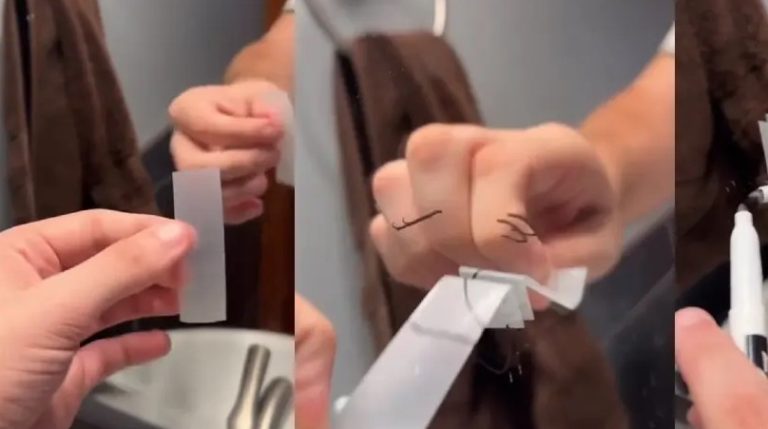
The most popular method to test a mirror is the fingernail test.
- Press the tip of your fingernail directly against the glass surface.
- Look closely at the reflection.
- On a normal mirror, there is a tiny gap between your actual finger and the reflected image because the reflective backing is behind a thick pane of glass.
- On a true two way mirror, the reflective coating is on the front surface. Your fingernail and its reflection will touch tip-to-tip with no gap at all.
While this trick is popular, keep in mind that it is not one hundred percent foolproof. Some high-end normal mirrors also have front-surface coatings to prevent double reflections.
The Flashlight Test
A much more reliable way to check a mirror is the flashlight test.
- Turn off all the lights in your room.
- Hold your smartphone flashlight or a small torch right up against the glass.
- Shield your eyes with your hands and look closely at the other side.
If it is a normal mirror, the light will simply bounce back at you, and the other side will remain dark. If it is a two way mirror, the light will pass through the glass, illuminating the hidden room on the other side and exposing whatever is behind it.
Pros and Cons of Two Way Mirrors
Like any technology, two way mirrors come with a unique set of advantages and disadvantages. Depending on what you need them for, they can be a blessing or a curse.
The Benefits
The biggest pro is discretion. They allow for observation, security, and testing without invading personal space or causing behavioral changes in subjects. In architecture, they can double as sleek, reflective exterior windows during the day while allowing inhabitants to see outside.
The Drawbacks
The primary downside is fragility and maintenance. Because the reflective coating is often exposed on the front surface or sandwiched delicately, they scratch easily. You cannot clean a front-surface two way mirror with harsh chemicals or abrasive scrubbing pads, or you will ruin the coating. Additionally, the lighting requirements are strict. If someone in the dark observation room accidentally turns on a lamp, the whole illusion shatters, and the people on the other side will see right in.
Ultimately, learning what is a two way mirror opens your eyes to the clever ways science shapes our daily lives. From keeping public spaces safe to helping scientists study human behavior, this simple pane of glass proves that things are rarely as straightforward as they appear.
Frequently Asked Questions
Can you see through a two way mirror from both sides?
No, you cannot see through it equally from both sides at the same time. Visibility depends entirely on the lighting. The side with the dimmer lights can see through to the side with the brighter lights, but not the other way around.
Are two way mirrors illegal in hotel rooms and bathrooms?
Yes, installing hidden two way mirrors in private spaces like hotel rooms, public restrooms, and fitting rooms is a severe invasion of privacy and is strictly illegal in almost all jurisdictions.
Do two way mirrors require electricity?
No, traditional two way mirrors do not require any electricity to function. They rely purely on glass coatings and the physical difference in light intensity between the two connected rooms.
What color is the back of a two way mirror?
Unlike standard mirrors that usually have a green, grey, or white protective paint backing, a true two way mirror often looks slightly tinted, grey, or dark when viewed from the back side.
Can I make my own two way mirror at home?
Yes, you can buy special reflective window film and apply it to a standard piece of clear glass. However, maintaining the correct lighting ratio in your rooms is crucial for the illusion to work properly.
Why do interrogation rooms use two way mirrors?
They allow law enforcement officers, prosecutors, and psychologists to observe suspects and witnesses in real time without making the subjects feel intimidated or distracted by an audience in the room.