Is a Mirror Accurate? [Read to Know Everything About Mirror]
When you look into a mirror, you assume you are seeing an exact, real-time copy of yourself. However, physics and psychology reveal that a mirror is not entirely accurate. From lateral inversion (flipping left to right) to our own brain’s psychological biases, the reflection staring back at you is a unique, altered version of reality.
Have you ever stood in front of a bathroom mirror, tilting your head and wondering if what you are looking at is actually real? It is one of those quiet, everyday philosophical questions we rarely say out loud. You brush your teeth, fix your hair, and head out the door. But deep down, a little voice asks: is a mirror accurate?
The short answer is both yes and no. From a purely scientific standpoint, a mirror is a master of physics, bouncing light waves in a predictable, mathematical way. But from a biological and psychological perspective, the reflection you see every morning is far from the unvarnished truth. Between optical flipping, brain tricks, and harsh lighting, your mirror might actually be playing subtle tricks on you.
Key Takeaways
- Lateral Inversion: Mirrors flip images horizontally (left to right), meaning you never see yourself the exact way others see you.
- Perception Biases: The mere exposure effect and confirmation bias make us hyper-critical of our own reflection, distorting accuracy.
- Lighting Matters: Bathroom mirrors often feature harsh overhead lighting that creates artificial shadows, altering your true appearance.
- The Non-Reversing Mirror: Special optical mirrors exist that reflect a true, non-flipped image, proving standard mirrors do alter your look.
- Cameras vs. Mirrors: Photos can look jarringly different because they capture a non-flipped image and use different focal lengths.
- Psychological Distance: We view our reflection through an emotional lens, making a mirror less than objectively accurate.
The Physics of Reflection: How Mirrors Work
To understand if a mirror is accurate, we have to start with the basics of physics. When light hits a mirror, it bounces off at the exact same angle it came in. This is called the law of reflection. If you shine a laser pointer at a flat mirror at a 45-degree angle, it bounces away at a 45-degree angle. It is simple, clean, and mathematically precise.
Do mirrors flip things horizontally?
Here is where things get tricky. People often say that mirrors flip things left to right. But if you think about it, a mirror does not actually flip your left side to your right side. If you raise your right hand, the reflection raises the hand on its left side from your perspective, but it is actually your right hand moving.
What a mirror actually does is flip things front to back along the z-axis. The light coming from your nose travels a tiny bit further to the glass and back than the light coming from your ears. Because of this front-to-back inversion, we experience lateral inversion. So, while the physics are precise, the way our brains interpret the image introduces the first major inaccuracy.
The Psychology of Your Reflection: Why You Look Different
Physics is only half the battle. The human brain is a master of editing, and it plays a massive role in how we perceive our reflection. When you ask yourself if a mirror is accurate, you have to factor in your own mind. You are not a neutral observer looking at a stranger; you are looking at yourself with a lifetime of emotional baggage.
Visual guide about Is a Mirror Accurate
Image source: img5.su-cdn.com
The mere exposure effect
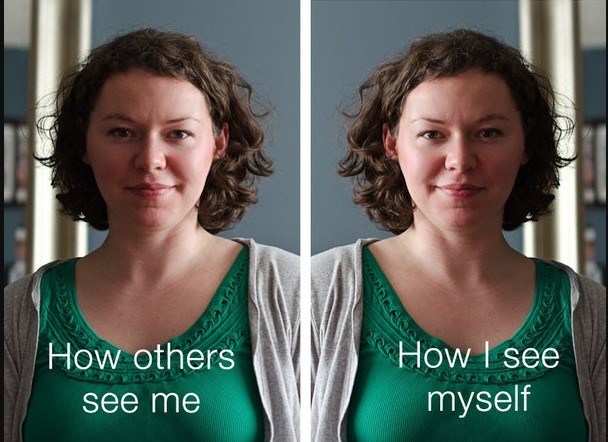
Because you only ever see your flipped face in the mirror, your brain adopts that flipped image as the true standard of beauty. When you look at a photograph of yourself, it is unflipped—meaning it shows what you actually look like to other people. Because your brain is not used to seeing this non-flipped version, the photo often looks weird, asymmetrical, or just plain wrong to you. Ironically, the mirror is the inaccurate version to everyone else in the world, but it is the accurate version to you!
Psychological bias and self-criticism
Have you ever noticed that you look worse in some mirrors than others? When you look into a mirror, your brain instantly goes to work evaluating your appearance. If you are stressed, tired, or having a bad day, your brain will amplify every tiny flaw. You might stare at a single acne spot or a stray hair for minutes, blowing it completely out of proportion. In this sense, the mirror acts as a blank canvas for your current emotional state.
Lighting and Environment: The Great Deceivers
Another reason mirrors can be wildly inaccurate is the environment surrounding them. A mirror is only as good as the light it reflects. If the lighting is terrible, your reflection will be too.
Harsh bathroom lighting
Most of us spend the majority of our mirror time in the bathroom. Bathroom lighting is notoriously harsh, often coming straight down from overhead fixtures. This creates deep shadows under your eyes, nose, and chin. It can make dark circles look like black holes and fine lines look like grand canyons. If you step outside into natural, diffused sunlight, you will often find that you look completely different—and usually much better!
Mirror quality and glass thickness
Believe it or not, not all mirrors are created equal. Cheap mirrors are often made with thin glass and uneven silver backing. This can cause subtle warping in the reflection. A warped mirror can make you look slightly wider, taller, or thinner than you actually are. High-end optical mirrors use flat, thick glass with front-surface reflection to eliminate any distortion, giving you the most accurate physical representation possible.
Mirrors vs. Cameras: Which One Is Telling the Truth?
One of the great modern debates is whether mirrors or cameras are more accurate. People often panic when they see a candid photo or a video of themselves because they look so different from their mirror reflection. So, which one wins?
The camera lens distortion
Cameras are not foolproof either. Phone cameras use wide-angle lenses to fit more into the frame. If you take a selfie from too close up, the lens will cause facial distortion, making your nose look bigger and your face narrower. Furthermore, cameras capture a static 2D image without the dynamic lighting and movement of real life.
The verdict on accuracy
Technically speaking, a non-flipped photograph taken from a distance with a standard lens is closer to what other people see when they look at you. However, a mirror is more accurate to your real-life movement because it updates in real time. Cameras freeze a single, awkward micro-expression, whereas mirrors show you as you naturally move, smile, and speak.
How to See Your Truly “Accurate” Reflection
If you are curious to know what you really look like to the rest of the world, you can actually test it out. Here are a few practical tips to find a more objective view of your appearance:
- Use the two-mirror trick: Stand between two mirrors placed at a 90-degree angle to each other. This creates a non-reversed reflection, showing you what you look like to other people.
- Step outside: Look into a handheld mirror while standing in natural sunlight to escape the harsh shadows of indoor lighting.
- Look at candid videos: Watch a video of yourself speaking or walking naturally. It will feel strange at first, but it is the closest representation of your real-life presence.
At the end of the day, obsessing over whether a mirror is accurate is a rabbit hole best avoided. Your reflection is just one perspective, filtered through glass, light, and your own mind.
Conclusion
So, is a mirror accurate? The verdict is nuanced. Physically, a flat, high-quality mirror does an incredible job of bouncing light to show your physical form in real time. But biologically and psychologically, it changes you. It flips you horizontally, it reflects the lighting conditions of your room, and it is judged by a brain that is hardwired to be your own worst critic.
Remember that the people who love you do not see you through a static, flipped glass pane. They see your warmth, your expressions, and your entire energy in motion. The next time you look in the mirror and pick yourself apart, take a deep breath and remind yourself that the reflection is only telling half the story.
Frequently Asked Questions
Are mirrors completely accurate?
No, mirrors are not completely accurate. While they use precise physics to bounce light, they flip images front-to-back, create lateral inversion, and are heavily influenced by environmental lighting and your own psychological biases.
Why do I look different in photos than in the mirror?
You look different because mirrors show a flipped (horizontally inverted) image that you are used to seeing every day, while photos show your unflipped face. Additionally, camera lenses can distort facial features depending on the distance and angle.
Do different mirrors show different reflections?
Yes, the quality of the glass and the lighting in the room play a massive role. Cheap mirrors can have subtle warps that distort your shape, and overhead bathroom lighting can create harsh shadows that exaggerate flaws.
What is a non-reversing mirror?
A non-reversing mirror is a special optical device made by joining two mirrors at a 90-degree angle. It cancels out lateral inversion, allowing you to see yourself exactly as other people see you.
Is the mirror image what people actually see?
No, the mirror image is actually reversed compared to what others see. Everyone else sees the non-flipped version of you, which is why photographs often look strange to your own eyes.
How can I see my true face?
To see your true face, you can use the two-mirror trick to eliminate the flip, look at candid video footage, or simply accept that your real-life presence is dynamic and cannot be captured in a single reflection.