Is How I See Myself in the Mirror Accurate?
Have you ever looked in the glass and wondered, is how i see myself in the mirror accurate? The truth is that our reflection is often distorted by a mix of optics, psychology, and emotional bias. By understanding the science behind how we perceive our faces and bodies, you can learn to see yourself with greater clarity and kindness.
Stand in front of your bathroom glass right now. What do you see? Do you focus immediately on a stubborn blemish, a stray hair, or a feature you wish you could change? Most of us do. We spend a few minutes each day inspecting our reflection, searching for flaws and fixing what we assume is broken.
Yet, a nagging question often crosses our minds: is how i see myself in the mirror accurate? It feels like it should be absolute truth. After all, glass does not lie, right? As it turns out, your reflection is far more complex than simple physics. A fascinating mix of optical science, psychological filters, and emotional bias shapes the person staring back at you.
Let us dive deep into the science of self-perception. We will explore why your mirror image is not the exact reality of how the world sees you, and how you can develop a healthier relationship with your reflection.
Key Takeaways
- Optical Reversal: Standard flat mirrors show a left-to-right flipped version of your face, which differs from how others see you in person or in unfiltered photos.
- Psychological Bias: Body dysmorphia, stress, and anxiety can drastically alter how your brain processes your physical reflection from day to day.
- The Mere Exposure Effect: You are used to your mirrored self, which is why un-flipped photos often look strange or unflattering to your own eyes.
- Facial Recognition: Your brain focuses heavily on flaws when you inspect yourself up close, ignoring the overall harmony that others notice.
- Lighting Matters: Harsh overhead lighting or poor mirror angles can cast unflattering shadows that distort your true features.
- Cognitive Reframing: Shifting your focus away from micro-flaws helps align your mirror reflection with a more realistic self-image.
The Physics of Reflection: Why Your Mirror Image Is Flipped
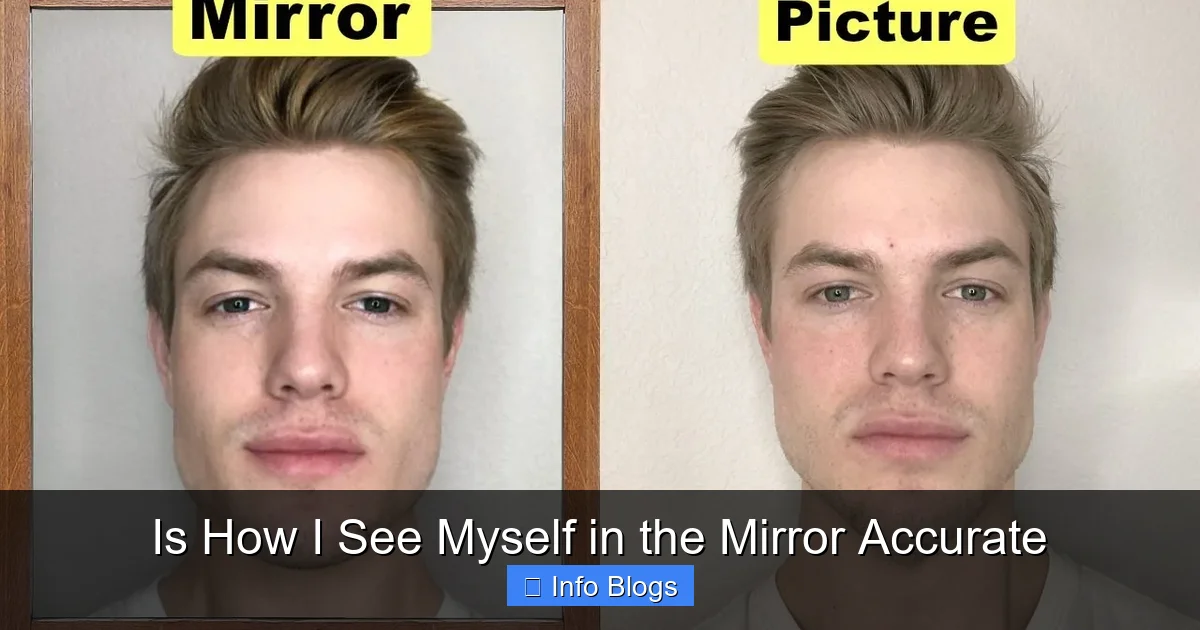
To answer whether is how i see myself in the mirror accurate, we must first look at basic physics. A standard flat mirror does not show you a true likeness of your face. Instead, it shows you a reversed image.
Left Versus Right
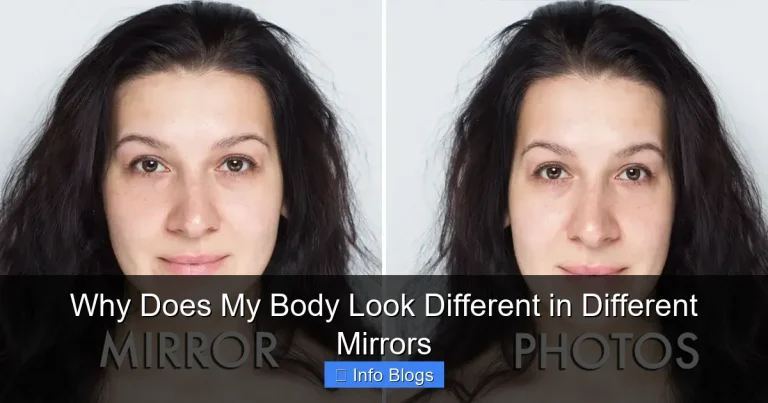
When you raise your right hand, your reflection raises its left hand. This phenomenon is called lateral inversion. Because humans are not perfectly symmetrical—no one is—your flipped face looks slightly different from your real-life face. If you have a part in your hair on the left, your mirror shows it on the right.
The Photo Shock
Have you ever looked at a casual photograph taken by a friend and thought, “Do I really look like that?” That sudden jolt of surprise happens because the camera captures your true, un-flipped face. People around you see this un-flipped version every single day. Because you are so accustomed to your mirrored face, the real version can feel jarring and unfamiliar.
Distance and Curvature
The type of glass matters, too. Cheap mirrors or decorative wall mirrors often have subtle curves that stretch or compress your proportions. Furthermore, standing inches away from the glass forces your eyes to focus intensely on small details, blowing minor imperfections completely out of proportion.
The Psychology of Self-Perception: Your Brain on Reflection
Physics is only half the battle. The human brain acts as an active editor when you look at your reflection. Is how i see myself in the mirror accurate from a psychological standpoint? Rarely.
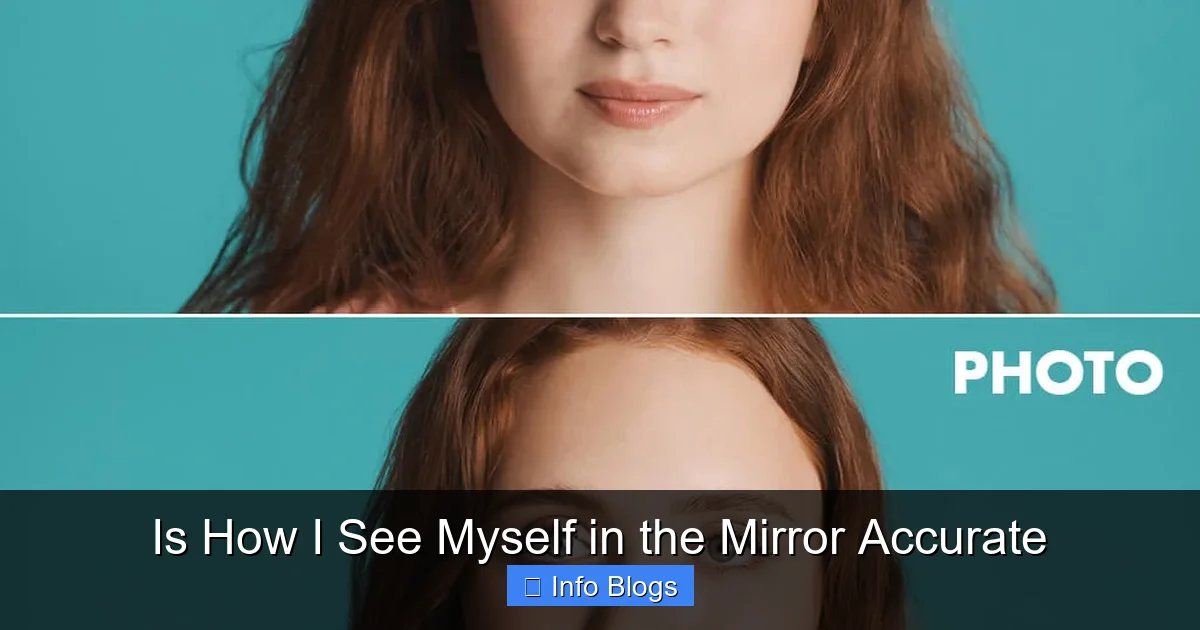
Visual guide about Is How I See Myself in the Mirror Accurate
Image source: img.fixthephoto.com
The Selective Attention Trap
Your brain is an expert at filtering information. When you look in the glass, your brain often triggers a hyper-focus state on features you feel insecure about. If you worry about your nose, your brain immediately zeroes in on your nose, ignoring your smile, your eyes, and your overall facial expression.
Emotional Mood Filters
Your emotional state changes your visual perception. If you are having a wonderful, confident day, you likely look in the glass and feel pleased with your appearance. If you are stressed, tired, or sad, your brain applies a harsh filter. You might look in the mirror and perceive yourself as worn out, bloated, or unattractive, even if nothing about your physical body has changed.
Body Dysmorphic Tendencies
For many people, the brain’s internal image of the body becomes severely distorted. This condition, known as body dysmorphic disorder, causes a person to obsess over minor or imagined flaws. Even without a formal diagnosis, low self-esteem creates a mental distortion that makes the mirror image feel like an enemy.
Lighting and Environment: The Ultimate Deception
Have you ever noticed how great you look in the mirror of a nice clothing store, but how terrible you look in your office restroom? Environment plays a massive role in answering is how i see myself in the mirror accurate.
The Overhead Lighting Problem
Most bathrooms feature harsh overhead lighting. This specific angle casts deep shadows under your eyes, emphasizes fine lines, and creates contours that do not exist under soft, natural light. It is one of the main reasons people feel discouraged first thing in the morning.
Distance Distortion
When you lean in close to pluck your eyebrows or apply makeup, you enter your personal bubble. You see pores, tiny hairs, and micro-blemishes that no one else could possibly notice from a normal conversational distance. Nobody stands two inches away from your face to judge your skin.
Practical Tips for Better Mirror Viewing
- Step back: Always evaluate your appearance from at least three to four feet away.
- Seek natural light: Step near a window to see how your face looks in diffused daylight.
- Change your focus: Practice looking at your whole face instead of scanning for isolated flaws.
The Mere Exposure Effect and Why We Judge Ourselves Harshly
Psychologists talk a lot about something called the mere exposure effect. This principle states that people tend to develop a preference for things simply because they are familiar with them. So how does this apply to your reflection?
Why Un-Flipped Photos Bother You
Because you look in the mirror every single day, your mirrored, flipped face becomes your baseline of normal. When you see a photograph or video of yourself, it violates that baseline. It looks “wrong” to you, even though it looks completely normal to everyone else in your life.
The Comparison Trap
Social media feeds flood our brains with heavily edited, filtered images. When you compare your raw, unedited mirror reflection to a polished digital avatar, you set an impossible standard. Real skin has texture. Real bodies shift and change. Reminding yourself of this truth is vital for your mental health.
Practicing Self-Compassion
It takes conscious effort to break the habit of critical self-inspection. Instead of asking is how i see myself in the mirror accurate every time you pass a glass pane, try shifting your internal dialogue. Acknowledge your reflection as a functional vessel that allows you to move through the world, rather than a decorative object meant for constant evaluation.
How Other People Actually See You
If your mirror is flipped, and your brain is biased, how do friends, family, and strangers truly perceive you? The answer might surprise you and bring a great deal of relief.
The Whole Package
When others look at you, they do not see a static, frozen image. They see a dynamic human being. They notice your smile, the way your eyes light up when you laugh, your posture, your voice, and your energy. These qualities create your true presence, which completely overwhelms any minor physical detail you obsess over.
Facial Symmetry in Motion
Human faces naturally look more symmetrical and attractive in motion than they do in a still photograph or a static mirror stare. When you talk, smile, and express emotion, your facial features blend together harmoniously.
Confidence is the Real Lens
Psychological studies consistently show that people find confident individuals more attractive. How you carry yourself has a massive impact on how others perceive your physical appearance. When you feel good, you project that energy outward, overshadowing any perceived flaws in the mirror.
Conclusion: Redefining Your Relationship with Your Reflection
So, is how i see myself in the mirror accurate? The short answer is no. Your mirror image is a laterally flipped, emotionally filtered, and often poorly lit version of reality. It fails to capture the vibrant, dynamic, and complete person that the world actually experiences.
The next time you catch your reflection, take a deep breath. Remember that the glass only shows a tiny, distorted fraction of who you are. Focus less on micro-managing your physical flaws and more on the wonderful things your body allows you to do. True beauty and accuracy do not live in a bathroom mirror—they live in how you love, laugh, and live your life.
Frequently Asked Questions
Is my mirror image what other people see?
No, your mirror image is flipped horizontally (left to right). Because humans are asymmetrical, other people see an un-flipped version of your face, which is why casual photos often look strange to you.
Why do I look different in every mirror?
Differences in lighting angles, glass quality, and distance drastically change your reflection. Overhead lights create harsh shadows, while minor curves in cheap glass can stretch or compress your features.
Why do I look worse in the mirror sometimes?
Your emotional state heavily influences your self-perception. When you feel stressed, tired, or anxious, your brain applies a negative filter that makes you hyper-focus on perceived physical flaws.
How can I see my true face?
To see your true face, you can look at un-flipped photographs or use a “true mirror,” which uses a special optical setup to show your non-reversed, real-life appearance.
Why do photos of myself look so strange?
You are accustomed to your flipped mirror reflection due to the mere exposure effect. When you see a standard photo, your brain notices the reversal immediately, making your face look unfamiliar.
How can I stop being so critical of my reflection?
Practice stepping back from the glass, avoiding harsh lighting, and shifting your focus from isolated flaws to your overall expression and body language. Cultivating self-compassion helps quiet the internal critic.